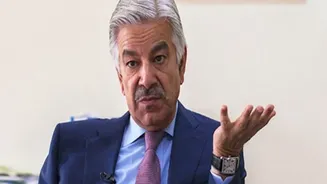

Is Balochistan Slipping Out of Pakistan’s Control? Khawaja Asif’s Stark Confession on 'Handicapped' ArmyPakistan’s Defence Minister Khawaja Asif has acknowledged
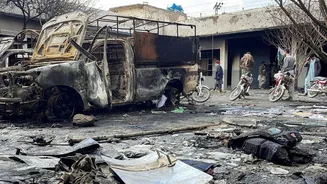
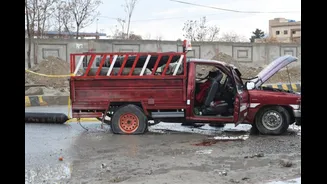
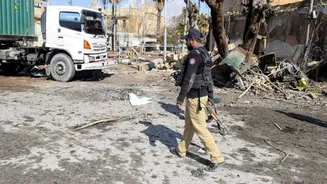
that the country’s security forces are “handicapped” in their fight against Baloch rebels, citing the vast size of Balochistan as a major challenge. His comments come days after Baloch rebels carried out coordinated attacks across several towns in the restive province, killing at least 80 security personnel and damaging or destroying more than 30 government properties. Addressing Pakistan’s National Assembly, Asif described the severe geographical constraints confronting security forces in the country’s largest but sparsely populated province. His remarks came amid a grave security situation after separatist groups carried out coordinated attacks at at least 12 locations, triggering one of the deadliest crises in recent years. Authorities said sweeping counter-terror operations across Balochistan have since killed at least 177 insurgents. "Balochistan constitutes over 40 per cent of Pakistan geographically...To control it is much more difficult than a populated city, and it needs the deployment of massive forces. Our troops are deployed there and are in action against them (terrorists), but they are physically handicapped by guarding and patrolling such a big area," he said. Pakistani authorities said the weekend violence left at least 33 civilians and 17 security personnel dead. Khawaja Asif has ruled out any negotiations with the Baloch Liberation Army (BLA), which claimed responsibility for the attacks, stating that the government would not hold talks with “terrorists” involved in the killing of civilians, including women and children. He also alleged a nexus between criminal elements and separatist groups, claiming that criminal gangs operate under the BLA’s banner and that the outfit provides cover for smugglers. "In Balochistan, tribal elders, the bureaucracy, and those running separatist movements have formed a nexus,” he said, adding that oil smuggling had earlier generated as much as 4 billion Pakistani rupees a day for smugglers. Balochistan, bordering Iran and Afghanistan, has witnessed a decades-long insurgency by ethnic Baloch separatists demanding greater autonomy and a larger share of the region’s natural resources. The resistance against the Pakistani state began soon after the princely state of Kalat was integrated, with uprisings occurring in 1948, 1958–59, 1962–63, 1973–77 and again from the early 2000s to the present.