






What is the story about?
DUBAI, United Arab Emirates (AP) — The conflict in the region intensified as Iran targeted a desalination plant in Bahrain on Sunday, marking the war's
ninth day. This strike represents a troubling expansion of hostilities, impacting critical infrastructure vital for drinking water supplies in the arid Gulf region. The attack followed a statement from Iran's Foreign Minister Abbas Araghchi, who accused the United States of damaging an Iranian desalination facility on Qeshm Island. He emphasized that the U.S. had set a dangerous precedent by launching such strikes, which could escalate tensions further.
Impact of Regional Strikes
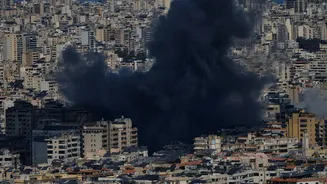
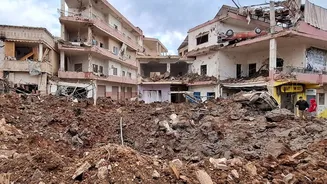
The U.S. military has not confirmed any strikes on the Iranian plant. Meanwhile, Israeli military actions in Lebanon have reportedly raised the death toll there to over 300 as evacuations were ordered for large areas in preparation for further offensives against Iran-backed forces.Since the conflict began on February 28, Israel and the U.S. have aimed to dismantle Iran's nuclear and missile capabilities, suggesting a broader goal of regime change. The ongoing hostilities have disrupted global markets and air travel, with Iranian leadership reportedly weakened by extensive airstrikes.
Iran's Response and Internal Dynamics
Despite an apology from Iranian officials for attacks on neighboring countries, missile and drone strikes have continued across the Gulf, resulting in civilian casualties. Iranian President Masoud Pezeshkian characterized neighboring nations as friends while accusing the U.S. and Israel of fostering discord.Pezeshkian stated, “We will not bow our heads to bullying, injustice or intrusion,” highlighting the limitations of the Iranian leadership over the paramilitary Revolutionary Guard, which operates independently under Supreme Leader Ayatollah Ali Khamenei's directives.
Challenges to Diplomatic Efforts
Amid the ongoing conflict, Pezeshkian's conciliatory remarks reflect a divide within Iranian leadership between those advocating for de-escalation and hard-liners committed to aggression against the U.S. and Israel. He noted that the leadership council had advised military forces against attacking neighboring nations unless provoked.However, hard-line judiciary chief Gholam Hossein Mohseni-Ejei asserted that military strategy would remain unchanged, emphasizing the need to target locations perceived as threats. He stated, “Intense attacks on these targets will continue,” reinforcing a commitment to aggressive posturing.
Continued Violence in the Region
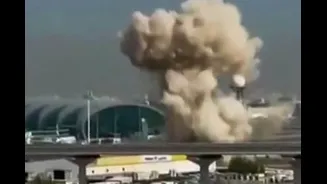
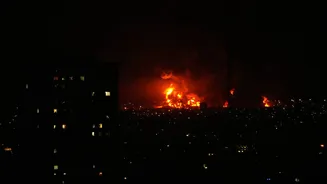
Despite calls for restraint, Iranian strikes persisted, with recent incidents reported in the United Arab Emirates, where debris from an intercepted drone killed a driver. The UAE has confirmed four fatalities attributed to the conflict since its inception.Additionally, drone attacks targeted critical infrastructure in Kuwait, while Saudi Arabia reported intercepting a drone aimed at its Shaybah oil field. Bahrain's Interior Ministry confirmed that missile fragments had fallen in Manama, resulting in injuries and property damage.