


What is the story about?
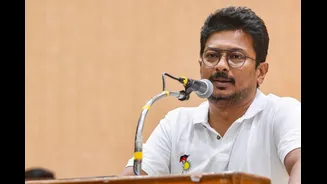
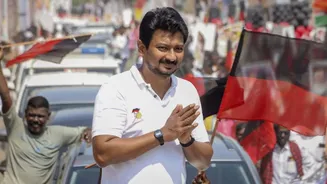
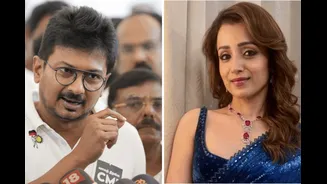
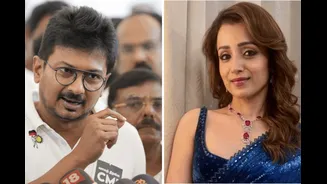
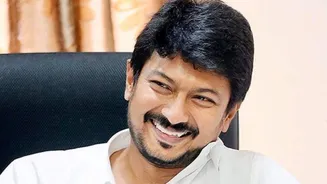
Tamil Nadu is witnessing dramatic scenes today as DMK leader and Leader of Opposition Udhayanidhi Stalin was detained by police over his alleged defamatory
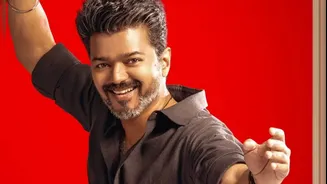
and objectionable remarks against Trisha Krishnan - actor and close supporter of CM Vijay - during a Cauvery-related rally in Thanjavur. Udhayanidhi was picked up from his Chennai residence after a case was registered, leading to sharp reactions from the DMK.
Meanwhile, tensions escalated in Thanjavur where Udhayanidhi is being taken to, as workers of both the ruling TVK and the opposition DMK gathered in large numbers, raising slogans, assaulting and heckling each other. Visuals from the ground showed workers throwing water bottles at each other and engaging in heated exchanges as police personnel attempted to maintain law and order. Security has since been stepped up in the area to prevent further escalation.
This is not the first time a Leader of Opposition or a major political leader has been detained in Tamil Nadu. The state, for decades, has witnessed such arrests accompanying shifts in political power.
From M Karunanidhi's dramatic midnight arrest under J Jayalalithaa's government in 2001 to the detention of MK Stalin and several DMK leaders during AIADMK rule, and vice-versa, Tamil Nadu has a long history of governments taking action against prominent opposition figures.
2001: Karunanidhi's Midnight Arrest
No discussion on political detentions in Tamil Nadu can begin anywhere other than with the dramatic arrest of former chief minister M Karunanidhi in June 2001.
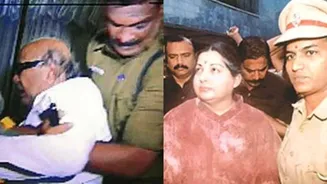
Just weeks after returning to power, then chief minister J Jayalalithaa's government ordered the arrest of Karunanidhi in connection with the Chennai flyover corruption case. Police officers entered his Chennai residence after midnight and took the 78-year-old DMK patriarch into custody.
The visuals of Karunanidhi being physically handled by police were broadcast across the country and became one of the defining images of Tamil Nadu politics.
The operation quickly escalated into a national controversy. Then Union ministers Murasoli Maran and TR Baalu were also arrested during the episode, while thousands of DMK cadres took to the streets. Then Prime Minister Atal Bihari Vajpayee publicly expressed concern and sought a report on the incident. Courts later questioned the manner in which the arrests had been carried out and raised concerns about the haste with which the FIR had been registered.
Even today, that arrest remains perhaps the most cited example whenever allegations of political vendetta arise in Tamil Nadu.
2011: MK Stalin's Arrest
Udhayanidhi's father, MK Stalin, himself experienced detention and arrest while in the opposition. In 2011, shortly after Jayalalithaa returned to power, Stalin and several DMK leaders were arrested while participating in protests against land-grabbing cases filed against party members. The arrests were part of a broader crackdown that the DMK alleged was politically motivated.
Over the years, Stalin has also faced multiple detentions during demonstrations, anti-government protests and political agitations.
Such arrests have often became political tools for both sides - the government showcasing law enforcement and the opposition portraying itself as a victim of state excess.
1996: Jayalalithaa Was Arrested Too
Much earlier, in 1996, the faces may be different, the parties may have swapped roles, but the script remained remarkably consistent.
Just months after the DMK, led by M Karunanidhi, returned to power in Tamil Nadu in May 1996, AIADMK chief J Jayalalithaa was arrested on December 7 in connection with corruption cases, including the alleged Colour TV scam and a disproportionate assets case.
Arrested from her Poes Garden residence along with her close aide VK Sasikala, Jayalalithaa spent 27 days in judicial custody. The move was widely viewed by her supporters as political vendetta, coming amid the bitter rivalry between the DMK and AIADMK and following years of political confrontation during her 1991–96 tenure as chief minister.
While she was later acquitted in the Colour TV case, the disproportionate assets case continued for nearly two decades, eventually resulting in her conviction in 2014 before being overturned by the Supreme Court after her death in 2017.
A State With A History Of Political Detentions
Tamil Nadu's political culture has long been shaped by intense rivalry between the DMK and AIADMK. Unlike many other states, this rivalry has often extended into police investigations, arrests and court cases.
Karunanidhi and Jayalalithaa spent decades accusing each other of misusing state machinery. Each side, when in power, frequently pursued cases against leaders of the other camp.
Political observers have often noted that arrests in Tamil Nadu tend to carry symbolic significance. A detention is rarely just a legal event; it is also a political message aimed at supporters, rivals and the wider public.
The Udhayanidhi Case
Against that backdrop, Udhayanidhi's detention appears less extraordinary than it might initially seem.
Police action followed controversy surrounding remarks allegedly made by him during a Cauvery-related agitation. Cases were registered, protests were announced by political opponents, and police eventually detained him from his residence.
The DMK has portrayed the move as an attempt to silence the opposition. The ruling side, meanwhile, has maintained that the action stems from specific complaints and legal proceedings rather than politics.
The larger story is not simply about Udhayanidhi Stalin.
It is about a political culture in which detention, arrest and legal action have repeatedly been deployed against opposition leaders across generations. Jayalalithaa experienced it. Karunanidhi lived it. Stalin faced it. Now Udhayanidhi has joined that list.