
DEATH VALLEY, Calif. (AP) — Death Valley, recognized as the driest location in North America, is currently undergoing a remarkable transformation with
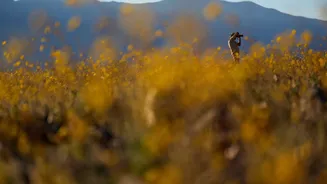
a rare superbloom of wildflowers. This event, which occurs once a decade, has turned the typically barren desert landscape into vibrant carpets of color. Wildflowers typically bloom in various parts of southern California and Nevada each year, but superblooms are infrequent in Death Valley National Park, the hottest place on Earth. The recent bloom, considered the most impressive since 2016, is attributed to significant rainfall and warm temperatures over the past six months.
Favorable Weather Conditions
According to park ranger Matthew Lamar, this year's bloom is particularly striking due to nearly a year's worth of rain received since October. The National Park Service reported that Death Valley experienced its wettest November on record, receiving 1.76 inches of rain. This moisture has allowed dormant seeds in the soil to germinate and flourish.Floral Diversity and Visitor Experience
The superbloom features a variety of flowers, including the desert sunflower, purple phacelia, brown-eyed primrose, and the pink desert five-spot. Jackie Gilbert, a visitor from Las Vegas, expressed her admiration for the stunning contrast between the golden flowers, the mountains, and the blue sky. She noted the flowers' resilience serves as a powerful reminder of life thriving in adverse conditions.Ecologists emphasize that the superbloom challenges the misconception that deserts lack life. Loralee Larios, a plant ecologist from the University of California, Riverside, explained that many plants and animals in Death Valley have adapted unique survival strategies to thrive in extreme conditions.
Short-lived Phenomenon
Visitors eager to witness the superbloom should act quickly, as the wildflowers are ephemeral. The blooms at lower elevations are expected to last until mid-to-late March, while higher elevations will see blossoms from April through June, as indicated by the National Park Service.Guests can refer to a poster outside the visitor center for prime viewing locations. Fields of wildflowers are currently visible just north of the visitor center and along Badwater Road. Ashford Mill, located an hour's drive from the visitor center, is also experiencing a burst of color.
Park rangers advise visitors to remain on designated trails to prevent damage to the flowers. Picking wildflowers is prohibited, and contact with certain species, like purple phacelia, may cause skin irritation. Each flower removed from its place reduces the potential for future blooms, according to ecologist Tiffany Pereira.
Additionally, visitors should be cautious of sphinx moth caterpillars, which roam the desert floor searching for brown-eyed primrose to consume before they burrow into the soil and metamorphose into moths.
Lamar remarked, “I think it’s a great time to come to Death Valley and have that unique experience because who knows when the next one will happen?”