








Global liquefied natural gas (LNG) prices could remain under pressure as winter approaches, with relatively low gas inventories in Europe raising concerns
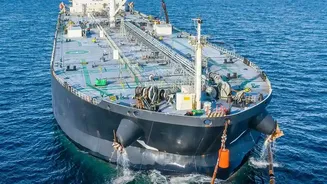
over supply availability and affordability. The trend could have implications for India, where domestic consumers are already facing higher costs amid an increase in international energy prices. According to a report by Jefferies, spot LNG prices climbed 6 per cent week-on-week to an average of $32 per million British thermal units (mmBtu). The brokerage expects prices to remain elevated during the winter months, partly because European gas storage levels are lower than those recorded last year. The report pointed out that gas inventories across the European Union (EU) currently stand at 75 per cent, compared with 83 per cent during the corresponding period in 2025. “Domestic affordability is stretched at current prices,” the report noted, adding, “Hence, we expect gas prices to remain elevated as we head into winter.” The decline in European gas storage levels has raised concerns about the ability of the region to meet higher heating demand during winter. With inventories below last year's levels, the market could remain vulnerable to supply constraints, potentially keeping spot LNG prices high. For India, the development presents an additional challenge as international LNG prices influence the cost of imported gas and its affordability for domestic users. The increase in spot prices comes alongside continued uncertainty in global energy markets, particularly crude oil, where geopolitical tensions and logistical disruptions are affecting supply chains. Crude Oil Exports Recover Jefferies observed that crude exports from the Middle East, excluding Iran, have recovered to more than 90 per cent of their pre-war levels. However, the improvement in export volumes has not fully eased supply-related concerns. The physical crude premium rose 8 per cent week-on-week to USD 9 per barrel last week, following renewed attacks in the region. The report also highlighted a sharp increase in crude volumes being transported through longer shipping routes and ship-to-ship transfers. “[Crude oil]-in-transit has reached an all-time high as ship-to-ship transfers are keeping oil aboard tankers for longer and importers are opting for lengthier routes to diversify away from the ME.” These developments have kept transportation expenses significantly above pre-conflict levels. Although freight rates declined 3 per cent week-on-week, they remained nearly eight times higher than levels seen at the beginning of the conflict. Shipping expenses now contribute more than 25 per cent of the landed cost of crude oil, compared with around 3 per cent before the conflict. “[Freight rates] could remain elevated in the near term with multiple attacks on oil tankers,” the report said. Russian Oil Discounts Narrow Indian oil marketing companies (OMCs) are also facing higher crude procurement expenses as discounts on Russian oil have reduced considerably. According to Jefferies, Russian Urals crude is now available at a discount of $2 per barrel to Brent, compared with $14 per barrel at the end of February. Meanwhile, the discount on Dubai crude against Brent increased sixfold week-on-week to $4 per barrel. With these changes, the cost of crude procurement for Indian refiners and OMCs remains broadly aligned with the Indian crude basket, which is currently priced at $118 per barrel. This has translated into substantial losses on retail sales of petrol and diesel, as fuel prices have not kept pace with the increase in input costs. “[Procurement costs] for OMCs are similar to the Indian crude basket price of $118/bbl, resulting in steep losses,” Jefferies said, adding, “Current loss of petrol/diesel is Rs25/37 per lt based on 15-day average pricing.” Russian Refinery Attacks The report also highlighted the impact of Ukrainian strikes on Russian refining facilities. Damage to refining infrastructure has reduced Russian petroleum product exports, tightening the availability of middle distillates in international markets. Jefferies expects the normalisation of supply chains to take time, which could support refining margins through the financial year 2026-27. “Normalisation of supply chains is likely to take time, supporting elevated margins over FY27,” it said. Separately, disruptions to petrochemical production in the Middle East have supported margins across the sector. Two major facilities each in Iran and Saudi Arabia have suffered damage, while shipments of naphtha from the Middle East to Northeast Asia continue to face interruptions. As a result, average margins for polyethylene (PE), polypropylene (PP) and polyethylene terephthalate (PET) have increased 55 per cent compared with their levels at the end of February. The improvement could benefit Reliance Industries' oil-to-chemicals (O2C) business, which is exposed to changes in petrochemical spreads and product margins. According to Jefferies, “Average petchem margins (PE/PP/PET) are currently up 55 per cent vs February-end, aiding Reliance's O2C profitability.”