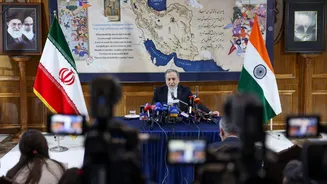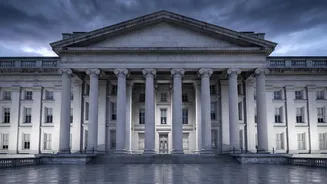








United States (US) President Donald Trump administration has led the 'Operation Economic Outcast' which is aimed at cutting Iran off from the global economy.
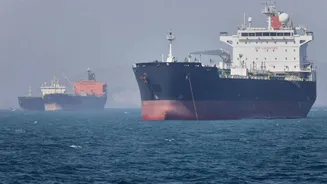
This could affect India even though New Delhi’s direct trade with Tehran has fallen sharply in recent years, experts believe. The US has stepped up economic pressure on Iran and the campaign seeks to restrict Iran’s access to oil revenues, shipping, finance and international trade. It also warned countries and companies doing business with Tehran of possible secondary sanctions. As announced by the US Treasury Secretary Scott Bessent the operation is an expansive campaign designed to cut Iran off from sources of revenue and pressure countries and companies that continue doing business with Tehran. US also said the objective is to sever the financial lifelines supporting the Iranian government and the Islamic Revolutionary Guard Corps (IRGC), while forcing Iran towards either global isolation or a return to the international economy on US terms. Impact on India: Experts believe that for India, the risks could come not from its limited Iran trade, but from higher oil prices, disruption to shipping and payments, and the wider use of US sanctions against countries dealing with Iran and Russia. Oil remains one of the serious concerns for India. If the economic warfare further disrupts oil flows through the Strait of Hormuz, a key route for global energy supplies. Ajay Srivastava, Founder, Global Trade Research Initiative (GTRI) in a LinkedIn post said, "A Hormuz disruption could sharply raise India’s oil-import bill. It could push up crude prices, freight rates and marine insurance costs. For India, which imports most of its crude oil, this could add pressure on inflation and the rupee". Rice also remains an important aspect for India in terms of trade with Iran. India exported $383.11 million worth of rice to Iran in the first half of 2026, while tea exports stood at $14.34 million. Indian exports to Iran fell from $3.5 billion in FY2019 to $1.2 billion in FY2026. These exports mainly include rice, tea, medicines, bananas, sugar and pulses, according to data by Global Trade Research Initiative (GTRI). Imports have fallen even more sharply, from $13.5 billion to less than $375 million, after India largely stopped importing Iranian crude. However, there has been a small recovery in purchases. India bought Iranian crude worth $707 million in April and May under a temporary US waiver, but halted these imports from June.