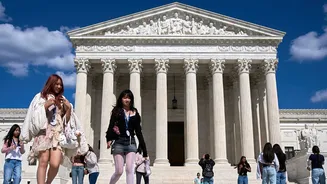








The Trump administration on Thursday asked the US Supreme Court to intervene in a dispute over whether immigrants can be deported to countries other than
their country of origin. The Department of Justice filed an emergency appeal, arguing that lower-court restrictions had disrupted deportation flights and left more than 1,400 people with final removal orders in the US. The government said some of those facing removal had criminal convictions and could potentially be released from custody if they could not be deported. The case concerns so-called third-country removals, in which people are sent to a country that is not their home nation. The government says such arrangements have been used by multiple US administrations because some countries refuse to accept deportees. The Trump administration has reached new agreements with several countries, although human rights groups have raised concerns about conditions in some of those destinations. The 45-page filing argues that lower courts have improperly restricted the Department of Homeland Security's authority to remove people with final deportation orders to countries other than those specified in the orders. The administration's appeal follows a decision by the First US Circuit Court of Appeals late on Wednesday to lift an existing stay. The government said that allowed an earlier district court restriction on third-country removals to take effect again. According to the administration, at least one deportation flight scheduled to travel to three countries was subsequently cancelled. The government said 150 people had already been removed from deportation flights since the restriction returned, with additional departures potentially at risk. The DOJ highlighted people it said were facing deportation after convictions for crimes including murder, attempted murder and rape. It argued that some could remain in the US because no other country was willing to accept them. The Supreme Court had previously ruled in favour of the Department of Homeland Security in July 2025, sending the broader dispute back to the lower courts. Groups representing the original plaintiffs have argued that deportees could face torture or persecution if sent to countries with which they have no connection. The Trump administration disputes that concern. Solicitor General D. John Sauer argued in the filing that there was a "lack of any realistic risk that they will be persecuted or tortured with the concurrence of foreign governments in third countries where they have little or no preexisting connection, particularly given that the Executive Branch has determined those countries are acceptable places of removal." The administration is now asking the Supreme Court to allow the third-country removals to proceed while the wider legal dispute continues.