





Even after 15 days of the conflict in the Middle East, India seems to be adequately covered when it comes to petrol and diesel, however, the same cannot
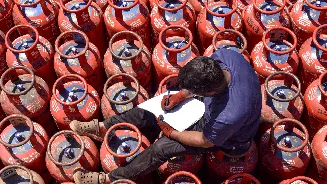
be said about the LPG supplies. Despite the ongoing conflict in the region and Hormuz being choked by Iran, India has been able to source its energy requirements from alternate sources (read Russian oil), and so far there has been no hike in fuel prices in the country. The LPG, on the other hand, is pinching India's household kitchens, dhabas and tea vendors in the streets have started shutting shops - so why is securing LPG supplies in this crisis proving to be a tougher ask than fuel needs? The problem boils down to three main factors. Firstly, when the Hormuz choke happened, it was bound to have a huge impact on LPG supplies, as estimates suggest that around 80-90% of LPG cargoes heading to India pass through the Strait of Hormuz. For the unversed, India consumes over 31 million tonnes of LPG every year and domestic production barely meets half of what's needed, rest is secured from several Gulf countries - Saudi Arabia, Qatar, the UAE and Kuwait. The closure of Hormuz disrupted India's supply chain big time. Unlike petrol and diesel, where India has a more than handy alternative in Russia, New Delhi has no significant alternative to the crude coming from the Middle East region. Union Petroleum Minister Hardeep Singh Puri recently said that nearly 70% of India's crude imports now come from sources outside Hormuz.
What About Strategic Reserves?
India has limited reserves for LPG and the model is largely based on regular supply reaching the country. India has LPG storage caverns in Mangaluru and Visakhapatnam, but their combined capacity of 1.4 lakh tonnes is enough to meet less than two days of the country’s consumption, according to the International Energy Agency (IEA).
In its India Gas Market Report – Outlook to 2030, the International Energy Agency (IEA) said the country does not currently have underground gas storage facilities and only has limited LNG storage capacity of about 1.9 bcm. Plans to create strategic gas reserves are still at the feasibility stage.
"The initial Underground Gas Storage capacity of up to 4 bcm is estimated to cost $1-2 billion, with construction expected to take 3-4 years following project approval," the IEA noted in the February 2025 report.
Rise in LPG Connections in India
Another key factor behind the growing pressure on LPG supplies is the sharp rise in household gas connections over the past decade, driven largely by government welfare schemes.
The Centre’s Pradhan Mantri Ujjwala Yojana significantly expanded access to cooking gas among rural households. As a result, the total number of LPG connections in India has crossed 33 crore.
According to data from the Petroleum Planning and Analysis Cell, LPG connections increased from about 10.6 crore in 2010 to 14.5 crore in 2014. The numbers continued to climb rapidly, rising from 22.4 crore in 2018 to nearly 33 crore by 2025.
How Government Is Managing The Situation
The Centre has already taken multiple measures to ensure that the situation remains under control. So far, the impact is mostly visible on streets and some restaurants in metro cities, prompting the government to invoke the Essential Commodities Act and issued a Natural Gas (Supply Regulation) Order 2026 to stabilize the market.
Indian refineries have been asked to increase LPG production by diverting propane and butane that are normally used for petrochemical manufacturing. Because of this, domestic LPG output has risen by about 28–30% since early March.
To manage supplies, the government has introduced a four-tier priority system. Under this system, households, hospitals and educational institutions are getting full LPG supply. However, commercial and industrial users such as restaurants and factories are facing sharp cuts, with many receiving only around 20% of their usual monthly supply.
Authorities have also imposed booking restrictions to prevent panic buying and hoarding. The minimum gap between cylinder bookings has been increased to 25 days in urban areas and 45 days in rural areas.
India has also arranged new LPG shipments from the United States, Norway, Canada, Algeria and Russia. However, these cargoes will take longer to arrive and are likely to be more expensive.
For now, the government’s priority is to ensure LPG supply for household consumption rather than commercial use.