









What is the story about?
The Southwest Monsoon has finally covered the entire country, reaching the remaining parts of Rajasthan, Haryana and Punjab on July 9, according to the India
Meteorological Department (IMD). The monsoon's nationwide advance came just one day later than its normal date of July 8.
Monsoon To Ease Over Central, Southern India
While the monsoon has now spread across India, weather patterns are set to change in the coming days. The IMD has forecast a significant reduction in rainfall activity over central India, including Maharashtra, Gujarat and Madhya Pradesh, from Thursday onward. Rainfall is also expected to decrease across south peninsular India from July 10.
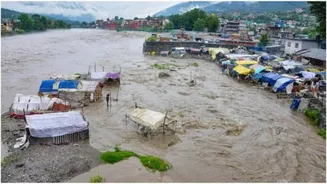
The development comes after days of intense rainfall battered large parts of western and central India, triggering flooding, landslides, building collapses and transport disruptions. Maharashtra, Gujarat and Madhya Pradesh were among the states that received heavy to extremely heavy rainfall during the active phase of the monsoon over the past week.
North India On Heavy Rain Alert
However, even as rainfall eases in the south and centre, the IMD has warned of a well-marked low-pressure area over southwest Uttar Pradesh and adjoining areas, bringing isolated extremely heavy rainfall over western Uttar Pradesh on July 9 and over Uttarakhand on July 9 and 10.
Several districts in Uttar Pradesh and Uttarakhand remain on alert, with local administrations taking precautionary measures.
Schools have been shut in parts of Uttar Pradesh, Uttarakhand and other rain-hit states amid concerns over flooding, waterlogging and landslides.
Threats Of Landslide In Spiti, Shimla, Mandi
The IMD has also flagged the possibility of landslides and mudslides in vulnerable parts of Himachal Pradesh, particularly in the districts of Spiti, Kinnaur, Kullu, Mandi, Shimla and Sirmaur. Authorities have warned that water levels in rivers, streams and other water bodies could rise rapidly and have urged residents to avoid vulnerable locations and maintain a safe distance from swollen water bodies.
Delhi-NCR, meanwhile, continued to receive intermittent rainfall on Thursday, prompting the IMD to issue an orange alert for the region.
The changing weather pattern marks a transition from the active monsoon phase that dominated the first week of July. According to meteorologists, rainfall activity is likely to weaken over western and southern India over the next fortnight, although localised heavy rainfall events remain possible, particularly across the Himalayan states and parts of north India.