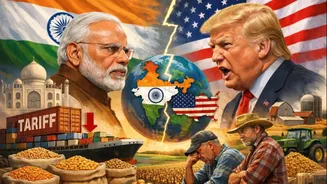

In a move that underscores the escalating trade tensions, India imposed a 30% import duty on pulses from the United States starting November 1, 2025. This
tariff, announced quietly in late October 2025, targets key American exports such as yellow peas, lentils, chickpeas, and dried beans. As the world's largest consumer of pulses—accounting for approximately 27% of global demand—India represents a critical market for US producers. The decision is widely interpreted as retaliation against US tariffs, including the Trump administration's 50% punitive duties on certain Indian goods. While the tariff aims to protect Indian farmers and generate revenue, it poses significant challenges for American agriculture. Background on the Tariff and US-India Pulse Trade Pulses, including lentils and chickpeas, are a staple in Indian diets, with domestic production often falling short of demand due to factors like erratic monsoons and limited arable land. India imports millions of tons annually to bridge this gap, making it a lucrative market for global exporters. The United States has emerged as a key supplier in recent years, particularly from the Northern Plains states like North Dakota and Montana, which produce over 40% of the country's pulses. Prior to the tariff, US pulses enjoyed relatively favorable access to India, bolstered by bilateral trade agreements and India's need for affordable protein sources. However, the 30% duty increases the cost of US imports by a substantial margin, rendering them less competitive. This escalation comes amid broader US-India trade frictions, including disputes over intellectual property, agricultural subsidies, and market access. For India, the tariff supports local farmers by curbing cheap imports that could depress domestic prices, while also providing fiscal revenue amid economic pressures like inflation. Yet, for American farmers, the implications are far-reaching and predominantly adverse. Immediate Effects: Reduced Exports and Price Pressures The most direct consequence of the tariff is a potential sharp decline in US pulse exports to India. Economic models suggest that higher duties lead to reduced demand, as Indian importers seek cost-effective alternatives from countries like Canada (a major lentil exporter), Australia, or Russia. In the first few months of 2026, preliminary trade data indicates a dip in US shipments, with analysts projecting annual losses in the tens of millions of dollars. This export shortfall creates an oversupply in the US domestic market, exerting downward pressure on wholesale prices. Farmers in pulse-dependent regions have reported concerns over falling revenues, with lentils and chickpeas—high-value crops—seeing price drops of up to 10–15% in spot markets by January 2026. For individual growers, this translates to lower income per acre, compelling cost-cutting measures such as reduced fertilizer use, delayed machinery upgrades, or even scaling back planting for the next season. Small-scale farmers, who lack the buffers of large agribusinesses, face the brunt, potentially leading to increased reliance on government subsidies or loans. Financial Strain and Income Losses for Farmers The tariff's ripple effects extend to farmers' overall financial health. Pulse farming is capital-intensive, with costs for seeds, irrigation, and labor already rising due to global inflation and supply chain disruptions. A 30% barrier in a market as vast as India exacerbates these pressures, with estimates suggesting aggregate income losses for US pulse producers could reach $50–100 million annually if the tariff persists. In a January 2026 letter to President Trump, senators from Montana and North Dakota emphasized the "significant competitive disadvantage" imposed on local farmers, urging diplomatic intervention. Rural economies in these states, where pulses contribute substantially to agricultural GDP, are at risk of contraction. Family farms, which dominate the sector, may face bankruptcy or consolidation, accelerating the trend of farm closures seen in recent years. Additionally, the mental health toll on farmers—already a concern amid trade wars—could worsen, with increased reports of stress and anxiety in affected communities. Regional and Supply Chain Disruptions The impacts are geographically concentrated in the US Northern Plains, where North Dakota and Montana lead production. These regions depend on exports for economic stability, and a tariff-induced slowdown could affect ancillary industries like trucking, warehousing, and seed suppliers, leading to job losses and reduced local spending. Supply chains may face bottlenecks, with excess pulses diverting to domestic animal feed or ethanol production at lower profit margins. On a positive note, some farmers might pivot to other crops like corn or soybeans, but this risks oversaturating those markets and further price volatility. Long-term, the tariff could prompt diversification into new export markets, such as Southeast Asia or the Middle East, though establishing these channels takes time and resources. Broader Trade and Policy Implications The tariff highlights the vulnerabilities of global agriculture to protectionism. While it benefits Indian farmers by shielding them from import competition, it underscores the interconnectedness of food supply chains. US stakeholders, including farm lobbies, have called for retaliatory measures or negotiations, potentially delaying comprehensive US-India trade deals. Analysts suggest that resolving the dispute could mutually benefit both nations—boosting US exports while helping India manage food inflation. In response, the US government might offer enhanced farm subsidies or explore bilateral exemptions, but these are short-term fixes. The situation also raises questions about sustainable agriculture, as farmers on both sides grapple with climate change and market instability. India's 30% tariff on US pulses represents a targeted escalation in trade disputes, with profound repercussions for American farmers. From immediate export losses and price drops to long-term financial strain and regional economic disruptions, the policy amplifies existing challenges in the US agricultural sector. As of early 2026, the full effects are still unfolding, but they serve as a reminder of how protectionist measures can cascade across borders, affecting livelihoods far from the policy's origin. Diplomatic efforts to de-escalate could mitigate the damage, fostering a more balanced global trade environment for essential commodities like pulses.