




What is the story about?
Israeli airstrikes targeted commercial and residential areas in central Beirut on Wednesday, resulting in at least 182 fatalities and numerous injuries.
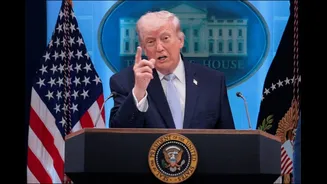
This marked the deadliest day in the ongoing conflict between Israel and Hezbollah, occurring shortly after a ceasefire announcement involving Iran. U.S. President Donald Trump stated that Lebanon was excluded from the ceasefire deal due to the presence of Hezbollah. He characterized the recent Israeli strikes as a separate conflict, despite assertions from Iran and Pakistan, the ceasefire mediators, that the agreement should encompass Lebanon.
The Scale of the Attack
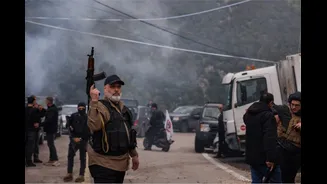
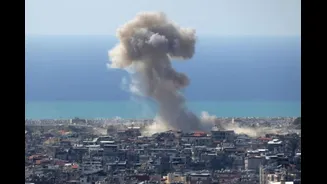
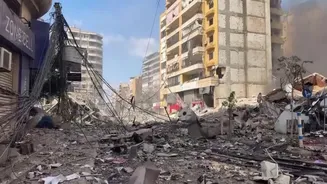
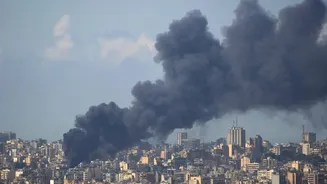
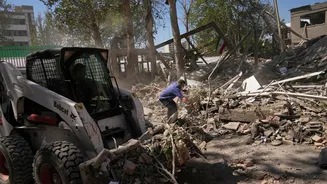
The strikes, described by Israel as its largest coordinated attack in the current war, targeted over 100 Hezbollah sites in a rapid series of strikes across Beirut and southern Lebanon. Witnesses reported thick black smoke rising over the city as explosions disrupted the previously bustling atmosphere.Emergency responders worked to recover victims and search for survivors amid the rubble of destroyed buildings. In the Corniche al Mazraa neighborhood, rescue workers utilized forklifts to clear debris while encountering charred bodies at one of the city's busiest intersections.
Responses from Lebanese Officials
In the wake of the airstrikes, Lebanese officials expressed outrage. Minister of Social Affairs Haneen Sayed condemned the attacks as a dangerous escalation, highlighting the high number of internally displaced persons seeking shelter in the targeted areas.Prime Minister Nawaf Salam criticized Israel for attacking civilian areas while Lebanon sought to negotiate a ceasefire. He emphasized the disregard for international law in Israel's actions, while President Joseph Aoun labeled the strikes as barbaric.
Hezbollah's Position
Despite the bombardment, there were no immediate reports of Hezbollah retaliating against Israel. An official from the group indicated that they were allowing time for ceasefire negotiations but remained skeptical of Israel's commitment to the agreement.Hezbollah's leadership made it clear that they would not accept a return to the pre-war conditions that allowed for frequent Israeli strikes, asserting their determination to respond to any continued aggression.
International Reactions
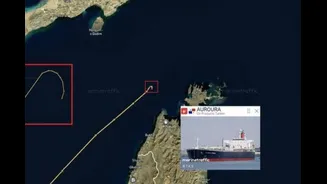
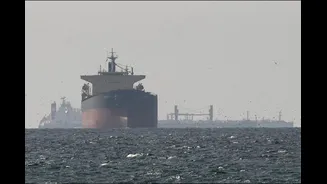
Following the strikes, Iran announced a suspension of oil tanker movements in the Strait of Hormuz. Israeli Defense Minister Israel Katz issued a warning to Hezbollah's leadership, stating that they would face consequences for their actions.The Israeli military claimed to have targeted Hezbollah's missile launchers and command centers while denying that the areas struck were civilian in nature. Local officials and residents disputed this, asserting that the strikes primarily affected residential neighborhoods.
Impact on Civilians
The recent escalation has exacerbated the humanitarian crisis in Lebanon, where over 1 million people have been displaced since the onset of the conflict. Families previously preparing to return to their homes expressed despair and uncertainty about their future amid the renewed violence.Residents described the chaos and destruction in the aftermath of the attacks, with many expressing frustration over the ongoing conflict and its toll on daily life.