








What is the story about?
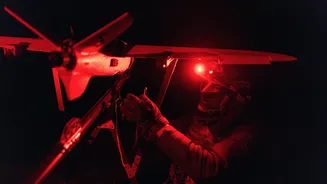
Ukraine has launched another large-scale drone attack deep inside Russia, targeting military and energy infrastructure across several regions as both sides
continue expanding long-range strikes far beyond the battlefield. Russian authorities said air defences intercepted 635 Ukrainian drones overnight, but regional officials acknowledged multiple casualties and damage to civilian and strategic infrastructure. The latest offensive reflects Kyiv's growing reliance on long-range drones to pressure Russia's military and economic networks. Ukrainian forces have increasingly targeted oil facilities, logistics hubs and military airbases in recent months, while Moscow has simultaneously stepped up missile and drone attacks on Ukrainian cities.
Ukraine Says Engels Airbase And Saratov Refinery Were Hit
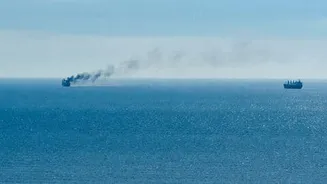
Ukraine's military said its overnight operation struck the Engels strategic airbase and the Saratov oil refinery, both of which have been repeatedly targeted since Russia's full-scale invasion began. Ukrainian officials also claimed responsibility for an attack on an oil depot in Russia's Kaluga region, saying the strikes triggered fires at the targeted facilities.
The Engels airbase hosts Russia's long-range strategic bomber fleet and has featured prominently in previous Ukrainian drone operations. The Saratov refinery, meanwhile, is regarded as an important component of Russia's domestic fuel infrastructure, making it a recurring target as Kyiv seeks to disrupt energy supplies supporting Moscow's war effort.
Russian Regions Report Civilian Casualties
Despite Moscow's claim that hundreds of drones were intercepted, several Russian regional authorities reported fatalities and infrastructure damage. In the Udmurtia region, acting Governor Olga Abramova said three people were killed after a Ukrainian drone struck a civilian vehicle more than 1,300 kilometres from the front line.
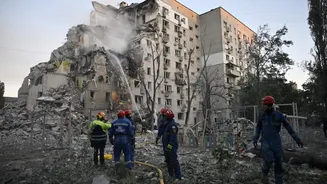
Authorities in the Saratov region also reported casualties after a residential building in Engels was hit, killing two people. In neighbouring Belgorod, acting Governor Alexander Shuvaev said four people, including a 13-year-old girl, were killed in separate attacks near the Ukrainian border.
Elsewhere, drones targeted a Wildberries warehouse in Russia's Samara region, around 800 kilometres from Ukrainian positions. Regional Governor Vyacheslav Fedorishchev said a fire broke out at the facility but reported no casualties.
Kyiv Expands Campaign Against Russian Economic Targets
The latest strikes form part of Ukraine's broader strategy of targeting infrastructure supporting Russia's war economy. Ukrainian forces have increasingly expanded attacks against fuel depots, logistics centres and commercial facilities as they seek to complicate Moscow's military sustainment efforts.
Wildberries, Russia's largest online retail platform, has become one such target. According to reports, multiple company facilities have been attacked since mid-July as Kyiv broadens its campaign beyond traditional military objectives.
Russia Continues Missile And Drone Attacks On Ukraine
Russia also carried out overnight strikes across Ukraine, with regional authorities reporting at least five deaths. In Zaporizhzhia, Governor Ivan Fedorov said a guided bomb struck a residential building, killing one person, while another attack on the outskirts of Kharkiv ignited a fire at a postal terminal and left another civilian dead.
Additional Russian strikes killed two people in the Dnipropetrovsk region and one person in Kherson, according to local officials. The attacks came as Russia continued its sustained campaign of long-range missile and drone strikes targeting urban centres across Ukraine.
Data compiled from Ukrainian Air Force reports indicates Russia launched a record 376 missiles during July, more than double the number fired the previous month. Ukrainian President Volodymyr Zelenskyy has warned that the country's air defences are under increasing strain, citing shortages of US-supplied Patriot interceptor missiles after recent large-scale Russian missile barrages.
The latest exchange underscores how the conflict has evolved into a sustained contest of long-range precision strikes, with both Ukraine and Russia increasingly targeting strategic infrastructure well beyond the immediate front line.