





What is the story about?
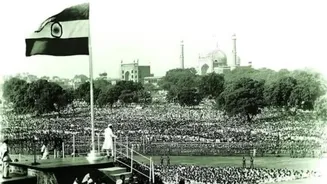
Yesterday, on August 15, the country entered its 80th year of independence, marking 79 years of freedom since the end of colonial rule in India. Prime
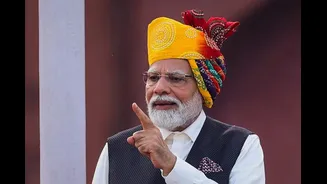
Minister Narendra Modi addressed the nation from the ramparts of the historic Red Fort, as Vande Mataram, the country's national song, resounded for the first time during these august proceedings. From his address to the people of the nation, in which he paid tribute to freedom fighters of the decades past, his reflections on India's evolution is potentially what resonated the most: "We were once counted among the 'Fragile Five'. However, India has, within just 12 years, emerged as the world's fastest-growing major economy."
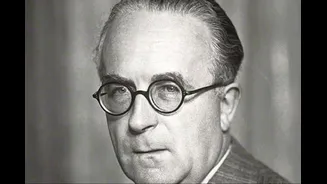
While true, no remembrance on the occasion of Independence Day, is actually ever complete without taking into account the rampage the partition caused. The provinces of Punjab and Bengal from an undivided India were potentially the most peril-stricken. The entirety of the turmoil can very well be attributed to the haste with which such a mammoth task was done and dusted by Sir Cyril Radcliffe, who himself after-the-fact. acknowledged that the last Viceroy of India, Lord Mountbatten, had accorded him too little time as the Chairman of the Boundary Commission, asking him to achieve the impossible in just 5 weeks.
The disaster that ensued, bottlenecking now not one, but two countries' paths to freedom was like a house of cards, whose collapse was impossible to stop once it was set in motion. But amid the chaos, the essence of 'freedom' stood delayed for some parts of West Bengal.
Also Read: Sucheta Kripalani: The Woman Who Sang The Nation Awake On The First Independence Day
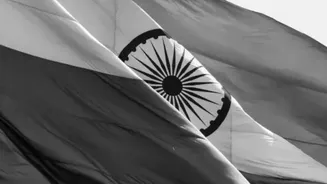
Back in 1947, the 'boundaries' of India were hand-drawn by Radcliffe, which was an arbitrary approach in its own way. Mistakes were bound to happen as they did; only, they turned out to be a little more pronounced on the side of Bengal. Radcliffe had mistakenly assigned several Hindu-majority border regions in Bengal to East Pakistan - which later became Bangladesh. This created a perplexing bout of confusion for the territories which today make up modern day Nadia and Malda in the state of West Bengal as they saw the flag of Pakistan being hoisted around them, as opposed to the Indian flag. Another bout of protests commenced with the objective of getting the British administration to fix the error. Lord Mountbatten was swift to take note, ordering a boundary revision, the official correction for which was reworked and announced on the night of August 17 that very year. The morning after, these districts in modern-day West Bengal experienced what the rest of the country had on the morning of August 15, just 72 hours prior.
Also Read: The First Morning Of Freedom: What India’s Independence Day Looked Like In 1947
The Indian national flag was officially hoisted across these specific districts on August 18, a day which is observed as the Bharat Bhukti Dibas, or India Inclusion Day. This day is celebrated as a local independence celebration of sorts in the village of Shibnibas in the Nadia district along with parts of Krishnaganj, border areas in Malda, and towns like Bongaon in North 24 Parganas.
If anything, India Inclusion Day is a telling marker of the utmost importance of freedom and national identity- something we may find easy to take for granted today, but was really, an intrinsic part of the legacy of many lives, families and settlements in the formative years of the nation.