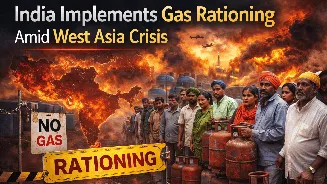








Amid disruptions due to the conflict in the Middle East, domestically produced natural gas will now be supplied on a priority basis to units that use it to produce LPG,
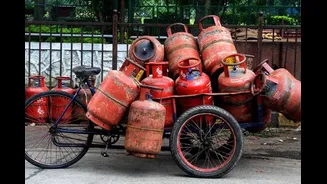
a government notification said. In the gazette notification passed late Monday night, LPG has also been put on the priority list of recipients of natural gas. Until now, compressed natural gas (CNG) and piped cooking gas have been the two priority sectors to receive domestic natural gas as their raw material. Under the revised allocation, requirements of LPG, CNG and piped gas manufacturers will be fully met first before natural gas is supplied to other sectors. The supply of natural gas to domestic piped natural gas grid, CNG for transport, and LPG production shall be treated as priority allocation. They would be supplied 100 per cent of their average past six month gas consumption, the notification said, PTI reported. Liquefied petroleum gas or LPG is primarily produced from the processing of natural gas and is also a byproduct of crude oil refining. It is made by separating and purifying propane and butane gases, which are then pressurised into a liquid state for easy transport and storage in steel cylinders typically seen in homes and restaurants for cooking.
Which sectors get priority?
Behind these three sectors is the fertiliser sector in second place, with at least 70 per cent of its past six months' demand being met. At No. 3, gas supply to tea industries, manufacturing and other industrial consumers will be maintained at 80 per cent of their past six-month average gas consumption, subject to operational availability, the notification said.
All city gas distribution (CGD) entities supplying gas to industrial and commercial consumers have been placed at No. 4 on the priority list. They must ensure their customers receive 80 per cent of their past six-month average gas consumption, subject to operational availability, according to the PTI report.
Domestic gas production, which meets about half the country's consumption of 191 million standard cubic metres per day, will be diverted to the priority sectors by curtailing supplies to petrochemical plants, power units and high-priced gas consumers.
Oil crisis in Strait of Hormuz
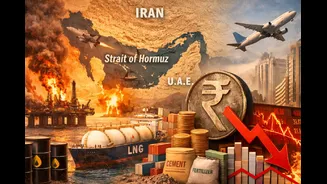
Following US-Israeli strikes inside Iran and Tehran's sweeping retaliation across the region, maritime traffic through the Strait of Hormuz has sharply declined, insurance premiums have surged, and energy markets have responded with immediate volatility. Roughly one-fifth of the world's seaborne oil and nearly a third of global LNG shipments pass through this narrow channel linking the Gulf to global markets.
The artery is the conduit for the supply of most of India's imports of gas, in the form of LNG, as well as LPG. With tanker movement being stalled, the government has reworked domestically available gas to keep the priority segments, such as the cooking needs of households and vehicular transport, going.
Natural gas pumped out of the ground or below sea bed is used to generate electricity, produce fertiliser, and is turned into CNG or LPG and piped to households kitchens for cooking.
"The Central Government has assessed that the ongoing conflict in the Middle East has resulted in the disruption of liquefied natural gas (LNG) shipments through the Strait of Hormuz and suppliers have invoked force majeure clause," the notification said, adding that the supply cuts would entail diversion of natural gas to the priority sectors.
The allocation rejig has been done to maintain supplies and secure equitable distribution and availability of natural gas for the priority sector. Pipeline compressor fuel and other essential pipeline operational requirements, too, have been put in this priority as without gas the pipelines cannot function.
"The supply of natural gas to the fertiliser plants shall ensure 70 per cent of their past six-month average gas consumption, subject to operational availability," the notification said. It added that the units shall not use the gas supply for any other purpose except in the production of fertilisers and the allocation to a particular unit cannot be diverted to any other unit.
Oil refining companies shall absorb the impact of LNG supply disruption to the extent feasible by reducing gas allocation to refineries to approximately 65 per cent of the past six months' gas consumption, it said. State-owned gas utility GAIL has been tasked to manage the supplies of natural gas to implement the priority order.
(With PIT inputs)