

Iran on Saturday set out a sweeping list of demands that it says the United States must meet before the Strait of Hormuz can reopen to maritime traffic,
casting further doubt over the future of the vital shipping route. Mohammad Bagher Zolghadr, secretary of Iran’s Supreme National Security Council, issued the demands in a statement carried by Iranian state media. He said the US must lift its naval blockade and sanctions on Iran, withdraw its military from around Iran, pay war reparations and release frozen Iranian assets. Iran also wants Washington to stop attacks on its regional allies and end what it described as threats against the country. A ceasefire agreed between Iran and the US in June said sanctions would be fully lifted only if a final agreement was reached on Iran’s nuclear programme. US officials have also previously said Iran could access its frozen funds only after committing to give up highly enriched uranium.
Iran-Oman Talks
The statement came as Iran and Oman continued negotiations over the future management of the Strait of Hormuz, which lies between the two countries.
Iran effectively closed the waterway after it was attacked by the US and Israel in February.
The latest demands have challenged expectations that an agreement between Iran and Oman could allow commercial shipping to resume through the strait and help ease global energy prices.
The issue could also put pressure on President Donald Trump to consider Iran’s demands if he wants to bring down consumer prices in the US, potentially an important issue for Republicans ahead of November’s midterm elections.
Iranian officials had already suggested on Saturday that a reopening of the waterway was not imminent. Hossein Mohebbi, a spokesman for Iran’s Islamic Revolutionary Guards Corps, said reopening the strait was "not contingent on the Iran-Oman negotiations".
Speaking to Tasnim, an Iranian news outlet affiliated with the Guards, he said reopening would depend "on the United States fully accepting Iran’s conditions".
He did not detail those conditions, but said the US must not interfere in Iran’s negotiations with Oman or other countries.
Iranian Foreign Minister Abbas Araghchi said on Saturday that Iran and Oman were "very close" to reaching an agreement, according to Tasnim. "However, the reopening of the Strait of Hormuz is contingent on other conditions, including the United States compensating for its violations of the Islamabad Memorandum," Araghchi was quoted as saying.
Dispute over the June Ceasefire
The June agreement, described as a "memorandum of understanding" and brokered by Pakistani mediators in Islamabad, called for the Strait of Hormuz to be opened and for oil sanctions on Iran to be temporarily lifted.
But the agreement contained vague language, and Iran and the US interpreted its terms differently.
The US supported a southern route for ships that passed along Oman’s coastline and avoided Iranian waters.
Iran subsequently warned and struck ships using that route. The cease-fire then collapsed and the US reinstated its naval blockade of Iranian ports. "The Americans were seeking to establish new routes through the Strait of Hormuz, and despite the warnings issued by our country, they sought to undermine Iran’s management of the strait," Araghchi said.
"Therefore, any violation of the memorandum of understanding or of Iran’s management of the Strait of Hormuz is absolutely unacceptable to the Islamic Republic of Iran," he added.
Araghchi said Iran and Oman were discussing a temporary route through the waterway, while the two countries’ militaries were negotiating the details.
Strait of Hormuz Traffic Almost at Standstill
Raz Zimmt, an Iran expert at the Institute for National Security Studies, an Israeli research institute, told The New York Times that the statements by Mohebbi and Araghchi reflected Iran’s position that the talks with Oman were intended "at most" to determine how the waterway could be reopened in the future.
Even if Iran and Oman reach an agreement, he said, Tehran would not accept its implementation without the US returning to its commitments under the June memorandum. "It is clear that Tehran will not agree to implement them without a return to the U.S. commitments under the memorandum, including lifting the naval blockade and resuming the process of sanctions relief," Zimmt wrote on social media.
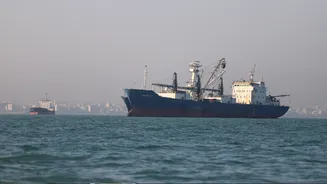
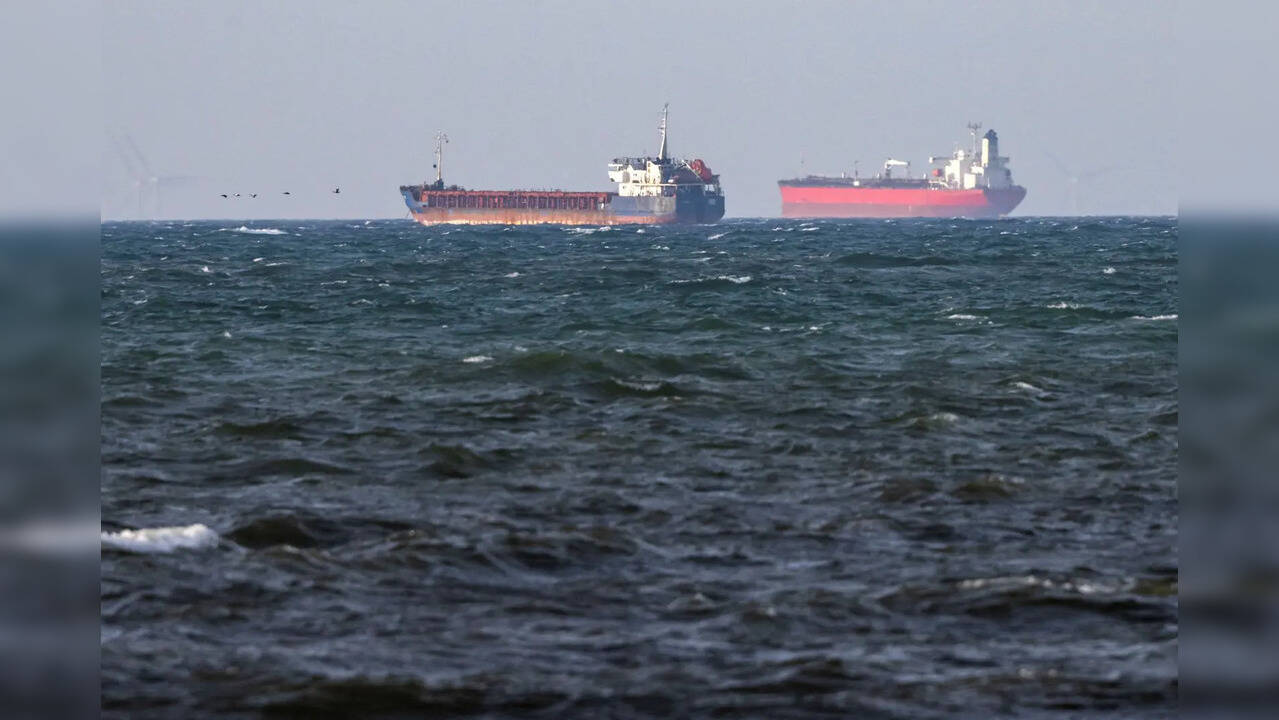
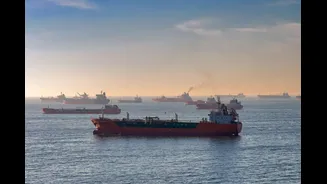
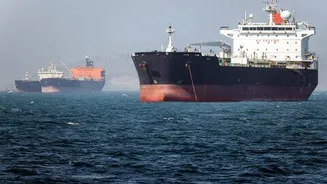
The disruption has sharply reduced shipping through the strait, one of the world's most important routes for energy supplies.
On Saturday, the Emirati foreign ministry said an Iranian attack had targeted a tanker belonging to the state-owned Abu Dhabi National Oil Company as it crossed the Strait of Hormuz.
The company said on Friday that at least 15 of its vessels had been attacked in the waterway since the conflict began, resulting in one crew member being killed and 20 injured.
Just over a dozen ships a day have crossed the strait over the past week, according to maritime data company Kpler. Before the war, an average of about 130 ships used the route each day.