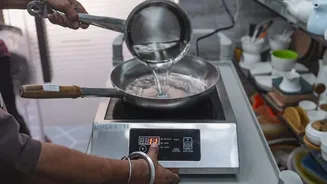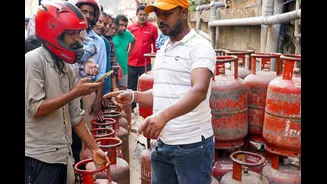




As theoil crisis in the Middle East brings ripple effects to India's households and streets, the Centre has urged households located near gas pipeline
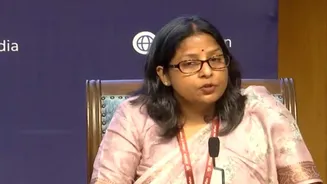
networks to switch from liquefied petroleum gas (LPG) cylinders to piped natural gas (PNG). In a press conference on Friday, oil ministry official Sujata Sharma asked LPG consumers to avoid panic buying of cylinders and shift to PNG where possible as authorities try to ease pressure on cooking fuel supplies. "LPG is an issue of concern," said Sharma, Joint Secretary (Marketing & Oil Refinery), Ministry of Petroleum & Natural Gas, adding the government is cracking down on black marketing and hoarding of LPG cylinders in coordination with states. The petroleum ministry has advised about six million households located near gas pipelines to opt for PNG connections to reduce the rush for LPG cylinders and said that millions can switch almost immediately. "Today, we have about 1.5 crore (15 million) domestic PNG consumers and they are getting assured supply. Apart from these 1.5 crore, there are about 60 lakh (6 million) households that are near PNG pipelines. They can very easily get PNG connections," Sharma said. "This is also important so that we can slightly reduce pressure on LPG," she added.
What do the numbers say?
The US–Israel war with Iran has disrupted energy flows through the Strait of Hormuz, one of the world’s most critical energy routes. In 2024, India consumed 33.15 million metric tons of cooking gas last year, with imports accounting for roughly 60% of demand. Nearly 90% of those imports came from the Middle East, making supplies vulnerable to disruptions in the Gulf.
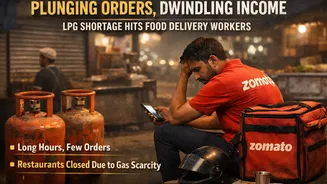
Within weeks, the cooking gas crunch has begun affecting the food industry as well. Restaurants across major cities such as Mumbai and Delhi have reportedly shut down 30-40% of services either fully or partially, with some establishments modifying menus due to limited LPG availability.
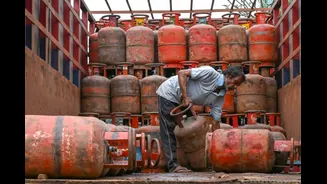
The country currently has 33.37 crore domestic LPG customers, and panic buying has already pushed daily LPG booking requests to about 76 lakh, up from around 55 lakh on March 1, with most bookings made online.
But amid the crisis, pipeline users report a steady supply.
"I’ve had pipeline connection for almost 10 years and the supply has been continuous," said Delhi resident Rajesh Mehra. "Unlike LPG cylinders, there’s no waiting for a slot or pre-booking trouble. The gas is always available."
PNG supply unaffected, say officials
Companies operating city gas networks have also sought to reassure consumers, assuring no disruptions.
Indraprastha Gas Limited (IGL), one of India’s largest City Gas Distribution (CGD) companies, said the supply of household PNG remains stable.
"We would like to assure the uninterrupted supply of Domestic PNG for household cooking and CNG for fueling for public transport and private vehicles to maintain urban mobility as per the government mandate and availability of natural gas supply," the company said in a statement.
Officials have ensured that the domestic PNG supply is expected to largely remain unaffected, and continuity will be maintained.
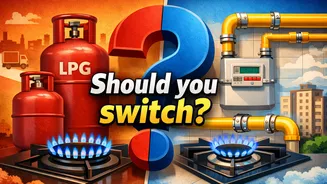
LPG vs PNG: What's the difference?
But why is it that piped gas supply is unaffected amid the crisis?
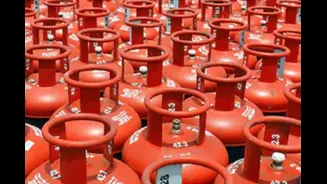
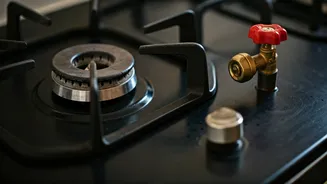
At its core, the difference between LPG and PNG lies in how the fuel reaches households. LPG is produced during crude oil refining and natural gas processing, then liquefied and stored in cylinders that are distributed through a nationwide supply chain. PNG, by contrast, is natural gas supplied continuously through underground pipelines connected to the national gas grid and city distribution networks.
Experts describe the difference as a contrast between “physical distribution cycles” and a “continuous infrastructure flow.” Which is why PNG adoption has also been rising steadily as pipeline networks expand across Indian cities.
Government data shows more than 1.3 crore households already have PNG connections, and authorities hope more eligible homes will switch to reduce pressure on LPG supplies during the current disruption.
Amid the conflict in the Gulf, the Centre is also in talks with city gas distributors to make it easier for consumers to switch to PNG connections. The government has suggested that commercial customers of LPG contact nearby city gas distribution centres to get natural gas through pipelines.
However, given the need for pipeline infrastructure to connect homes, it remains unclear how quickly households can switch from LPG to PNG in the short run.