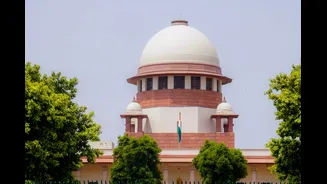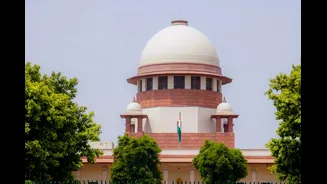





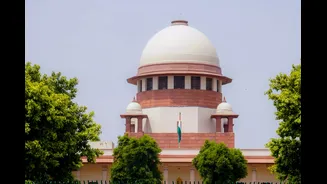


The Supreme Court on Tuesday issued notice to the Ministry of Education and the Central Board of Secondary Education (CBSE) on a batch of petitions challenging
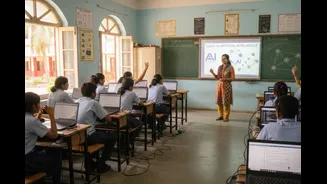
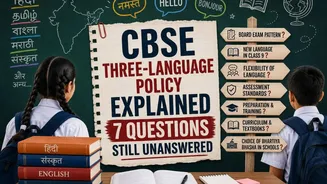
the implementation of the board's three-language policy for Class 9 students. A Bench led by Chief Justice of India (CJI) Surya Kant posted the matter for further hearing on July 22, 2026, directing all parties to complete their pleadings before the next date. The petitions challenge CBSE circulars that require students to study three languages, with at least two being Indian languages, while foreign languages such as French can only be offered as a third or fourth optional language. Petitioners Raise Concerns Over Implementation Senior Advocate Anand Grover argued that the CBSE circulars were issued without legal authority, contending that only NCERT has the power to frame such academic policies. He also submitted that schools lack the teachers and textbooks needed to implement the policy effectively. Appearing in another matter, Senior Advocate Mukul Rohatgi highlighted the difficulties faced by students already studying foreign languages. He argued that a Class 9 student who has been studying French cannot suddenly be required to take up another Indian language and appear for examinations within the same academic session. Senior Advocate Shyam Divan submitted that while the policy had been diluted through a later clarification, the core issues remained unresolved. He argued that the implementation had been advanced earlier than originally envisaged, creating practical challenges for schools. Senior Advocate Gopal Sankaranarayanan also urged the court to stay implementation of the policy, expressing concerns that teachers could face adverse consequences if schools fail to comply. Supreme Court Observations During the hearing, the Bench questioned the use of the term "native Indian language." Justice Joymalya Bagchi observed that the objective of promoting Indian languages aligns with the constitutional vision, though the terminology used in the policy may require reconsideration. He remarked that while Indian languages deserve encouragement, it was necessary to examine whether the phrase "native Indian language" was appropriate. The Bench also questioned whether issues still survived after CBSE's clarification issued on June 29, 2026. CJI Surya Kant assured the petitioners that if teachers were dismissed over implementation of the policy, the affected parties could approach the Supreme Court, which would consider granting appropriate relief. The Centre sought two weeks' time to file its response. Accepting the request, the Supreme Court issued notice to the Centre and CBSE and listed the matter for hearing on July 22, 2026. The petitions contend that the policy has been implemented without adequate textbooks, trained teachers or sufficient preparation, placing schools and students under significant academic pressure. They also argue that the move has sparked concern among parents, teachers and constitutional experts over both its implementation and legal basis.