






What is the story about?
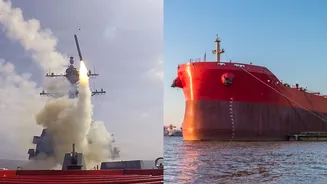
Approximately 90 ships, including oil tankers, have traversed the Strait of Hormuz since the onset of the conflict with Iran, which continues to export
millions of barrels of oil despite the effective closure of this vital waterway, as reported by maritime and trade data platforms. Many of these vessels engaged in what are termed 'dark' transits, evading Western sanctions and oversight, according to maritime data firm Lloyd's List Intelligence. Recently, ships affiliated with India and Pakistan have also successfully navigated the strait amid intensified governmental negotiations.
Impact on Global Oil Prices
As crude oil prices surged past $100 per barrel, U.S. President Donald Trump urged allies and trading partners to deploy warships to reopen the strait, aiming to stabilize oil prices. However, shipping traffic through this critical corridor has significantly declined since early March, with about 20 vessels reported attacked in the region.Iran's Oil Export Resilience
Despite the ongoing conflict and Western sanctions, Iran has exported over 16 million barrels of oil since early March, according to trade analytics platform Kpler. China has emerged as the largest buyer of Iranian oil, capitalizing on the situation.Analyst Ana Subasic from Kpler noted that Iran's oil export volumes have demonstrated 'continued resilience.' Furthermore, Kun Cao, a client director at Reddal, highlighted Iran's ability to profit from oil sales while maintaining control over this crucial export route.
Maritime Traffic Analysis
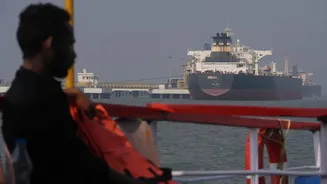
Between March 1 and 15, at least 89 ships, including 16 oil tankers, crossed the Strait of Hormuz, as reported by Lloyd's List Intelligence. This figure is a decrease from the pre-war daily traffic of approximately 100 to 135 vessels. Over one-fifth of these ships were believed to be affiliated with Iran, with others linked to China and Greece.Other vessels have successfully navigated the strait, including the Pakistan-flagged crude oil tanker Karachi, which passed through recently. A spokesman for the Pakistan Port Trust confirmed the vessel's safe passage but refrained from disclosing specific route details.
Diplomatic Engagements
India-flagged liquefied petroleum gas carriers Shivalik and Nanda Devi, owned by the state-run Shipping Corp. of India, also crossed the strait around mid-March. India's Foreign Minister Subrahmanyam Jaishankar stated that these vessels were able to transit following diplomatic discussions with Iran, while Iraq is reportedly in talks to allow its oil tankers through the strait.Richard Meade, editor-in-chief of Lloyd's List, suggested that these transits may involve some level of diplomatic intervention, indicating that Iran may have 'effectively created a safe corridor' for certain vessels.
Strategic Maneuvers by Iran
Some vessels near or within the strait have identified themselves as Chinese-linked or operated by all-Chinese crews to mitigate risks of attacks, leveraging China's strengthened ties with Iran. Oil prices have surged over 40% since the beginning of the conflict, with Iran warning that it would prevent any oil shipments intended for the U.S. and its allies from passing through.In an effort to stabilize oil prices, U.S. authorities indicated they would permit Iranian oil tankers to cross the strait, with Treasury Secretary Scott Bessent stating that Iranian ships have been allowed to depart to meet global demand.
Ongoing Conflict and Its Implications
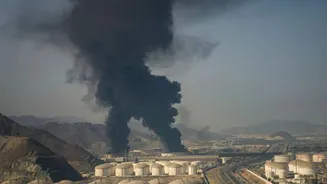
The U.S. has targeted military sites on Kharg Island, a critical hub for Iran's oil exports. However, President Trump noted that the oil infrastructure has largely been left intact. The latest maritime movements through the Strait of Hormuz indicate that it is not entirely 'closed,' but rather selectively restricted against certain traffic, while still facilitating Iranian exports and a limited number of non-Iranian movements.Analysts from Dutch bank ING expressed that if Iran's strategy aims to inflict economic pain through elevated energy prices, the number of tankers allowed through the Strait of Hormuz may be considerably limited.