



What is the story about?
A magnitude 3.2 earthquake struck Nepal on Thursday night, around an hour after a magnitude 5.0 earthquake hit China's Tibet region, according to the National
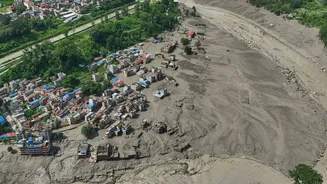
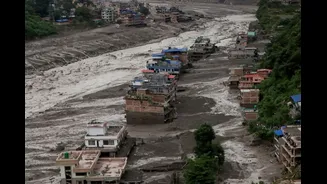
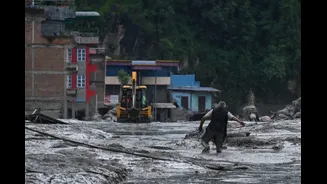
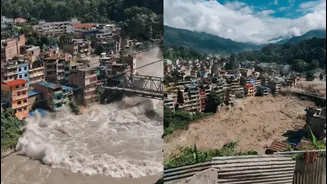
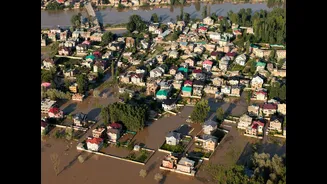
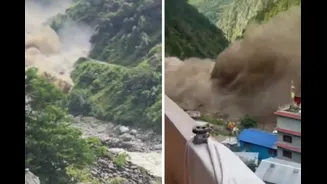
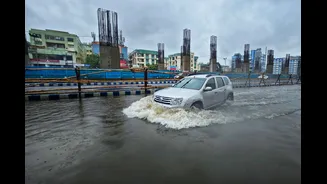
Centre for Seismology (NCS) and the German Research Centre for Geosciences (GFZ). The fresh tremors come even as rescuers race against time to trace hundreds of people still missing, including 290 Indian nationals, with the death toll from the massive Nepal-Tibet flash floods rising to 392. "EQ of M: 3.2, On: 27/08/2026 21:18:58 IST, Lat: 27.483 N, Long: 88.008 E, Depth: 10 Km, Location: Nepal," the National Centre for Seismology (NCS) posted on X.
A magnitude 5.0 earthquake struck China's Tibet region late on Thursday, the GFZ said. The epicentre was hundreds of miles north of the regions of Nepal and China that were hit by a devastating flash flood on Wednesday.
The quake was at a depth of 10 km in northern Tibet, GFZ said. So far, no loss of life or damage to property has been reported. "EQ of M: 4.9, On: 27/08/2026 20:15:53 IST, Lat: 33.121 N, Long: 86.775 E, Depth: 10 Km, Location: Tibet," the National Centre for Seismology (NCS) posted on X.
China's earthquake networks centre also reported a magnitude 4.7 quake in Nagqu, Tibet on Wednesday, state-run Xinhua news agency said.
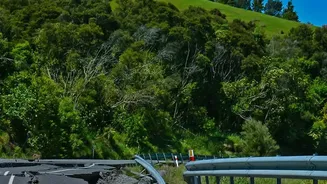
One group of scientists investigating the disaster believes the reported earthquake may not have triggered the landslide that led to the devastation in Nepal. Instead, they say the seismic signal may have been produced by the landslide itself. The United States Geological Survey also noted that the 5.2 seismic event near Kodari, Nepal, was caused by a landslide, and not an earthquake.
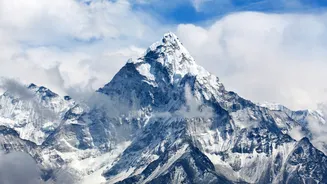
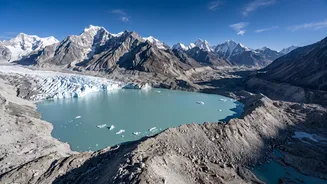
Daniel Shugar, a geologist at the University of Calgary in Canada, told CNN that the earthquake was "probably seismic energy released by a landslide". The scientists believe a huge section of glacier may have broken away and fallen into the valley.
A rock landslide may then have created a fast-moving mixture of ice and rock, which gathered additional sediment and water as it moved downstream during the monsoon season.
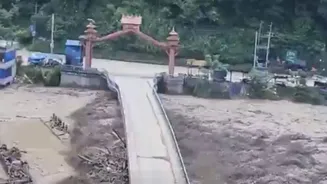
Shugar said it could take weeks to establish exactly what happened. "What is hard to reconcile is the gargantuan volumes of water that we see in these absolutely horrific videos," he said.
The assessment suggests that a huge chunk of ice breaking away from a Himalayan glacier may have helped trigger the deadly flooding in Nepal that has left over 362 Dead. More than 1,500 have been missing, including around 300 Indians.