



India is keeping a close watch on fast-moving political changes in Venezuela, as decisions taken by the Donald Trump administration could redraw global
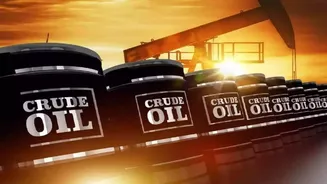
crude oil supply lines and potentially create fresh opportunities for New Delhi. With Venezuela’s vast oil reserves back in focus, the country may once again emerge as a strategic option for India’s energy-hungry economy. Following the removal of long-time Venezuelan leader Nicolas Maduro, President Trump has outlined plans to assert control over Venezuelan oil assets. He has also stated that Caracas would transfer between 30 and 50 million barrels of sanctioned crude to US control. “This oil will be sold at its market price, and that money will be controlled by me, as President of the United States of America, to ensure it is used to benefit the people of Venezuela and the United States!” Trump wrote on social media. If sanctions are eased and Venezuelan crude finds its way back into global circulation, India could regain access to a supplier that once played a significant role in its oil imports. India’s Expanding Oil Demand And Import Dependence India ranks among the world’s largest consumers of crude oil, burning close to five million barrels per day to fuel its economy. Nearly 90 per cent of this requirement is met through imports, making the country highly sensitive to geopolitical shifts and pricing dynamics in global energy markets. Before the outbreak of the Ukraine war in 2022, India sourced most of its oil from countries such as Iraq, Saudi Arabia, Russia and the United States. Western sanctions on Moscow dramatically altered this balance, pushing Russia to offer steep discounts that India quickly capitalised on. Since then, India has imported crude worth about $144 billion from Russia, emerging as its second-largest buyer after China. Even as price incentives narrowed in 2024, Russian oil continued to dominate India’s import basket. Russian Crude Dominance And India’s Push To Diversify At present, Russia accounts for roughly 35 per cent of India’s oil imports, or about two million barrels per day. Supplies also flow in large volumes from Iraq, Saudi Arabia, the UAE and the US, along with smaller quantities from Kuwait, West Africa and Mexico. Despite ongoing geopolitical pressure, including Trump’s earlier imposition of a 25 per cent levy on India for buying Russian crude and support for legislation enabling tariffs of up to 500 per cent, discounted Russian oil remains India’s cheapest option, often priced $10–15 per barrel below Brent. Still, diversification efforts are underway. Data from Kpler shows Russian shipments to India dropped to a three-year low of around 1.2 million barrels per day in December 2025, while US exports surged sharply during the same period. Venezuela’s Limited Role Today, But Strategic Potential Tomorrow For now, Venezuela’s contribution to India’s oil mix is marginal. Between April and December 2024, it accounted for just one per cent of India’s oil import bill, with total imports of only 22 million barrels during the year. This is a far cry from the mid-2010s, when Venezuela supplied about 12 per cent of India’s crude needs and bilateral trade peaked at $13 billion. With Venezuela’s oil sector potentially reopening, India faces a calculated choice. Venezuelan crude is expected to cost around $60 per barrel after logistics, making it costlier than Russian oil but competitive with other global benchmarks. Experts Urge Caution Amid Policy Uncertainty Analysts warn that the situation remains fluid. “It’s too early to say anything yet because the US policy on Venezuela’s governance is still indeterminate,” Indian Diplomat Deepak Bhojwani told The Quint. “Though President Trump has said they will exploit Venezuelan oil, we cannot be certain what role non-US companies may be called upon to play in exploration and related activities,” he said. “Possible benefits to India will depend upon the price at which the oil is offered, which again will depend upon who will be allowed to sell because the US may not give Venezuelan oil companies a free hand. Trump may decide to first allow US-based companies that operated earlier in Venezuela to recover what they lost and only then compensate others," Bhojwani added. For the moment, Russian crude remains India’s most economical and dependable option. However, a politically stabilised Venezuela could strengthen India’s energy security and bargaining power in the global oil market over the medium to long term.