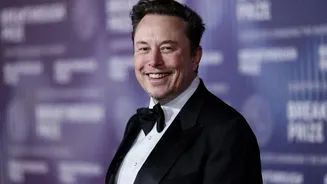






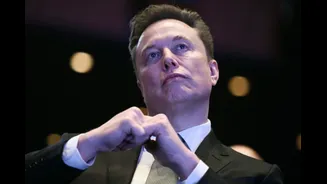
Elon Musk has merged his artificial intelligence start-up, xAI, into SpaceX, further intertwining his business empire and creating what is now the world’s
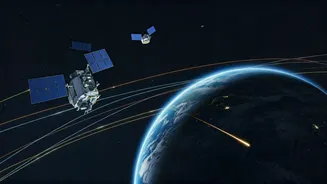
most valuable private company. While financial terms were not formally disclosed, people familiar with the deal say the combined entity is valued at more than $1 trillion, with SpaceX pegged at roughly $1 trillion and xAI at about $250 billion. The acquisition gives xAI a powerful financial backer at a time when the young AI firm has been burning cash to catch up with rivals, while allowing SpaceX to deepen its push into artificial intelligence and large-scale computing. In a memo to employees, Musk described the merger as a step toward building a “vertically integrated innovation engine” spanning rockets, AI systems, satellite internet, direct-to-device communications and the social media platform X. According to sources, the merged company may pursue an initial public offering as early as June, with Musk aiming to raise around $50 billion, though the timing and valuation remain uncertain. SpaceX reportedly financed the deal by issuing new shares, significantly diluting existing investors, on the bet that the combined enterprise will ultimately be worth far more than SpaceX alone. The merger reflects Musk’s long-standing approach of treating his companies as parts of a single ecosystem. Last year, he combined X with xAI to pool data, computing power and staff. Now, by linking xAI with SpaceX, Musk is pushing an even more ambitious vision—one that includes plans to build data centers in orbit to power future AI systems. The move is not without risk. xAI has limited revenue and faces scrutiny over its chatbot Grok, while SpaceX remains a major government contractor whose Starlink network has drawn geopolitical attention. Critics also question the technical and economic feasibility of space-based data centers, an idea Musk has championed in recent months. Still, supporters see the merger as a bold form of vertical integration that could give Musk a unique edge in the global AI race. As one investor put it, Musk appears to be betting that the convergence of space, AI and data infrastructure will define the next technological frontier—even if it requires investors to take a leap of faith.