








What is the story about?
MOSCOW (AP) — On Tuesday, Russia initiated extensive maneuvers of its nuclear forces, which include practice launches of nuclear-capable ballistic and
cruise missiles. These drills occur in the context of a significant rise in Ukrainian drone attacks. The three-day exercise will engage 64,000 troops, over 200 missile launchers, more than 140 aircraft, 73 surface warships, and 13 submarines, with eight of those submarines armed with nuclear-tipped intercontinental ballistic missiles, according to the Defense Ministry.
Focus of the Drills
The maneuvers will emphasize the 'preparation and use of nuclear forces under the threat of aggression,' as stated by the ministry. The exercises will also involve coordination with Belarus, a neighboring ally that hosts Russian nuclear weapons, including the latest intermediate-range nuclear-capable Oreshnik missile system.Context of the Exercises
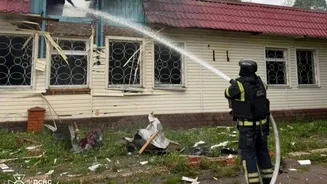
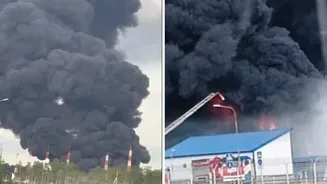
These military drills come as Ukraine has intensified its drone attacks against Russia, including a recent barrage targeting Moscow's suburbs that resulted in three fatalities and damage to several buildings and industrial sites.Russian President Vladimir Putin has frequently highlighted the significance of Moscow's nuclear arsenals since the invasion of Ukraine in February 2022, aiming to deter increased Western support for Kyiv.
Impact on Domestic Perception
The recent escalation in attacks complicates the Kremlin's efforts to portray the conflict in Ukraine—now in its fifth year—as a distant issue that does not impact the daily lives of Russian citizens.Putin's International Engagement
The military exercise coincides with Putin's two-day visit to China, where he is expected to discuss various international matters.Last week, Putin praised the successful test launch of the new Sarmat ICBM, designed to replace aging Soviet-built nuclear missiles.
Revised Nuclear Doctrine
In 2024, Putin introduced a revised nuclear doctrine stating that any conventional attack on Russia supported by a nuclear power would be treated as a joint attack, aiming to deter the West from permitting Ukraine to strike Russian territory with longer-range weapons. This stance appears to lower the threshold for potential use of Russia’s nuclear arsenal.Kremlin's Response to Ukrainian Attacks
Some Russian hardliners have urged the government to retaliate against Ukraine's allies in Europe with conventional strikes, arguing that NATO members would be hesitant to respond militarily against a nuclear superpower.Last month, the Defense Ministry released a list of European factories allegedly involved in producing drones for Ukraine, warning that attacks on Russia involving these drones could lead to 'unpredictable consequences.'