






What is the story about?
DUBAI, United Arab Emirates (AP) — Iran issued a warning on Monday stating it would target electrical plants across the Middle East if U.S. President Donald
Trump acts on his threat to bomb power stations in Iran. The Islamic Republic also threatened to mine the entire Persian Gulf in the event of an invasion. This declaration by Tehran jeopardizes electrical supplies and water resources in Gulf Arab nations, particularly since many of these countries integrate their power stations with desalination plants that are vital for providing drinking water.
Iran's Military Response
In response to the threats, Iran's semiofficial Fars news agency released a list of critical facilities, including the United Arab Emirates’ nuclear power plant. Over the weekend, Iran targeted Dimona in Israel with missiles, aiming at a site believed to be linked to its suspected atomic weapons program, although no damage was reported.On Monday, Israel conducted new strikes on Tehran, announcing it had initiated a broad wave of attacks on infrastructure targets without providing further details.
Tehran's Threat of Mining the Gulf
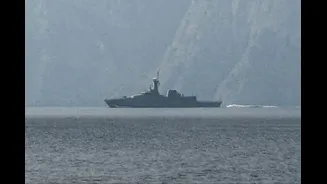
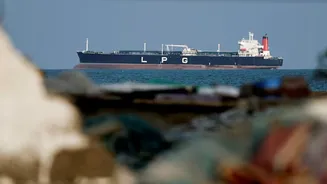
As apprehensions rise in Tehran regarding a potential deployment of U.S. Marines, Iran’s Defense Council cautioned against any invasion attempts. The council stated, “Any attempt by the enemy to target Iran’s coasts or islands will, naturally and in accordance with established military practice, lead to the mining of all access routes in the Persian Gulf and along the coasts.”The U.S. has been working to keep the Strait of Hormuz open for energy shipments, but Iran has shut the strait, through which a significant portion of the world’s oil is transported, in response to U.S. and Israeli actions. Although Iran claims the strait remains accessible to non-U.S. vessels, the situation continues to be tense.
Escalating Tensions with the U.S.
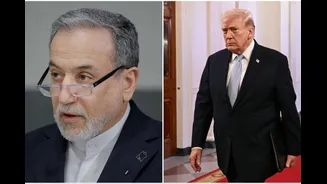
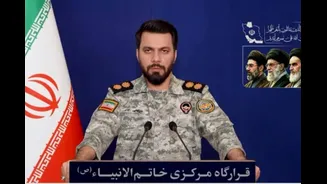
The exchange of threats between Tehran and Washington escalated over the weekend, with Trump warning that if Tehran did not allow free passage through the strategic waterway, the U.S. would “obliterate” Iran’s power plants. He issued a 48-hour ultimatum that was set to expire late Monday.In a statement broadcasted on Iranian state television, Iran’s paramilitary Revolutionary Guard indicated that if the U.S. proceeded with attacks, it would retaliate by targeting power plants that supply electricity to American bases, as well as other infrastructures tied to American interests.
Additionally, Iranian parliament speaker Mohammad Bagher Qalibaf asserted that vital infrastructures across the region, particularly energy and desalination facilities crucial for Gulf nations, would be considered legitimate military targets.
Impact on Global Oil Prices
Oil prices have surged in recent trading, with Brent crude, the international benchmark, reaching approximately $112 per barrel, marking an increase of nearly 55% since the conflict escalated on February 28 with U.S. and Israeli strikes against Iran.Fatih Birol, head of the International Energy Agency, remarked that the ongoing crisis in the Middle East has had a more severe impact on energy markets than the oil shocks of the 1970s combined with the Russia-Ukraine conflict. He warned that no country would be immune to the consequences if the situation deteriorates further.
According to Jorge Moreira da Silva, a senior UN official, the global community has already begun to experience the effects, including significant price hikes in oil and gas, adversely affecting millions, particularly in developing countries across Asia and Africa.
Warnings to Iranian Civilians
U.S. Central Command chief Adm. Brad Cooper, in an interview aired Monday, warned that Iran was launching missiles and drones from populated areas, implying that these locations could be targeted in response. He advised Iranian civilians to remain indoors, stating, “You need to stay inside for right now.”Adm. Cooper emphasized that the U.S. and Israel's campaign against Iran is progressing as planned, focusing on infrastructure and manufacturing facilities to diminish Iran’s military capabilities. He suggested that Iran could expedite the end of the conflict by ceasing its retaliatory strikes, although he did not clarify if that would lead to a reduction in U.S. and Israeli military objectives.
Human Cost of the Conflict
As the conflict continues, Iran's health ministry reports that the death toll has surpassed 1,500, while 15 individuals in Israel have died due to Iranian strikes. Civilian casualties have also been reported in the occupied West Bank and Gulf Arab states.In Lebanon, Israeli airstrikes targeting the Iran-aligned militia Hezbollah have resulted in over 1,000 fatalities and displaced more than a million people. Meanwhile, Hezbollah has retaliated by firing hundreds of rockets into Israel.