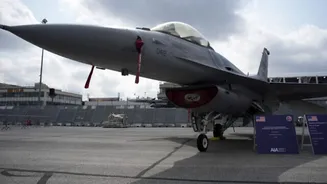



At least 10 US military transport aircraft have landed at Israeli air bases, while additional American military planes have reportedly been deployed to
three Arab countries, amid mounting tensions between Washington and Tehran and growing speculation about a possible resumption of US military strikes against Iran. The reported military airlift comes as the United States and Israel step up preparations for a potential new military campaign against Iran. The aircraft reportedly landed at the Ovda and Nevatim air bases in southern Israel, while additional US military transport planes were sent to bases in Jordan, Saudi Arabia and Qatar, according to Israeli public broadcaster KAN. The deployments were first reported on Thursday (October 29), with the aircraft movements forming part of a wider US military buildup across the Middle East. According to a report by Anadolu Agency, some of the aircraft departed from Fort Bliss in Texas, which houses major US Army air and missile defence units. The cargo carried by the aircraft has not been officially disclosed. However, their reported departure point has raised speculation that the deployments could be connected to the movement of air defence equipment, interceptor missiles and other military supplies. There has been no official confirmation from Washington that the aircraft were carrying specific weapons systems or that a decision had been taken to launch fresh attacks against Iran. An Israeli official told KAN that the US and Israel were coordinating closely and preparing for any decision that US President Donald Trump may take regarding military action against Tehran. "Israel and the United States are coordinating closely, and although no decision has yet been made on the matter, the Americans and Israel are preparing for any decision President Donald Trump makes," the official was quoted as saying.
Trump Briefed On Military Options Against Iran
The reported deployments come as senior US military officials are believed to be examining options for renewed military action against Iran.
According to The Wall Street Journal, US Central Command (CENTCOM) chief Admiral Brad Cooper briefed President Trump at the White House on Thursday on possible military options against Tehran. Defence Secretary Pete Hegseth and Chairman of the Joint Chiefs of Staff General Dan Caine also attended the meeting, according to a report by The Times of Israel, citing Reuters and other reports.
The developments have fuelled speculation that Washington could consider a fresh military campaign after the November 3 US midterm elections. Reports have suggested that the proposed operation could involve several days of strikes targeting Iranian military installations, energy infrastructure and other strategic facilities.
The Associated Press reported that US officials had privately urged several Middle Eastern countries and regional allies to prepare for possible renewed strikes against Iran after the elections, as well as potential Iranian retaliation against energy facilities and critical infrastructure. However, Trump has not taken a final decision on military action.
US Moves To Strengthen Regional Defences
The aircraft movements are also being reported alongside efforts to strengthen American air defences across the region.
The US is reportedly moving a Patriot missile defence system from Texas to the Middle East to reinforce protection against possible Iranian missile attacks. US forces have also been taking precautionary measures, including relocating personnel from bases considered vulnerable to potential retaliation.
Separately, an additional aircraft carrier and a Marine Corps unit are expected to arrive in the region in November, adding to the American naval presence already operating in the Middle East.
Why Are US-Iran Tensions Rising Again?
The latest developments come months after the US and Israel launched military strikes against Iran on February 28, triggering retaliatory attacks by Tehran against Israeli and American targets across the region. A ceasefire agreement was reached in April, but disagreements over regional security and freedom of navigation through the strategically important Strait of Hormuz have continued to strain relations.
Iran has maintained that it remains open to diplomacy but has also warned against further military action. With Washington reportedly weighing its military options and regional allies preparing for possible retaliation, the latest deployments signal heightened military readiness across the Middle East.
Importantly, the aircraft movements do not confirm that Trump has authorised another attack on Iran. The US military buildup is being reported as preparation for a possible escalation, with the final decision resting with the US President.