




India on Thursday took note of the US House of Representatives passing legislation that could empower President Donald Trump to impose tariffs of up to 100
per cent on India and other major buyers of Russian oil and gas, saying it is "closely monitoring" further developments. In a statement, the Ministry of External Affairs (MEA) said India remains firmly committed to ensuring energy security for its 1.4 billion people and will continue to pursue diversified sources of energy based on evolving market dynamics. "As stated on several earlier occasions, India remains firmly committed to ensuring energy security for its 1.4 billion people. It will continue to do so through diversified sourcing and on the basis of evolving market dynamics," the MEA said. The ministry said the issue has been discussed at high levels with various US interlocutors in recent months, with India clearly articulating the potential implications of such measures for both bilateral ties and international energy markets. "The Indian side has also made clear its determination to take all necessary measures to protect its trade and economic interests," the MEA said, adding that the government will work closely with Indian trade and industry bodies to address the implications of the latest developments.
India Faces 100% Tariff Threat
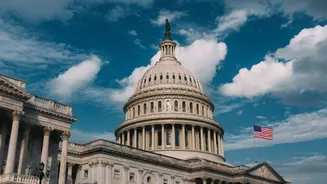
The Lindsey O. Graham Sanctioning Russia and Iran Act of 2026 passed by 262 votes to 159 on Wednesday and now goes to Trump for his signature. The bill targets Russian officials, banks and a so-called "shadow fleet" of tankers accused of helping Moscow keep its energy exports moving. It would also extend existing sanctions on Iran for five years.
The legislation would give the US President the power to impose tariffs of up to 100% on the five largest importers of Russian oil or natural gas.
India is among the countries that could be affected because of its substantial purchases of Russian crude. It imports more than 88% of the crude oil it consumes, and Russian supplies currently account for more than half of its imports.
The legislation also comes at a time when New Delhi and Washington are negotiating a bilateral trade agreement.