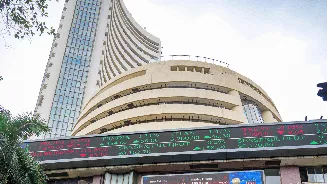







India’s stock markets will remain shut on Monday, January 26, as the National Stock Exchange (NSE) and BSE remain closed in observance of Republic Day,
in line with the NSE’s official holiday calendar. This marks the second trading halt of January, following the mid-month closure on January 15, and is part of a broader list of non-trading days scheduled for 2026. On Republic Day, all key market segments will be suspended. This includes trading in equities, equity derivatives, securities lending and borrowing (SLB), currency derivatives, and electronic gold receipts (EGR). As usual, markets also remain shut on all Saturdays and Sundays throughout the year. Stock Market Holidays Lined Up For 2026 According to the NSE calendar, there are 16 official trading holidays in 2026, excluding weekends. After Republic Day on January 26, markets will close for occasions such as Holi on March 3, Good Friday on April 3, Maharashtra Day on May 1, and Christmas on December 25, among others. An exception worth noting is November 8, which coincides with Diwali Laxmi Pujan but falls on a Sunday. While it is technically a trading holiday, exchanges will hold a special ‘Muhurat Trading’ session on that day. The exact timings for this ceremonial session will be announced later by the NSE and BSE. Regular Trading Hours When Markets Are Open On normal trading days, the equities market follows a structured schedule. The pre-open session begins at 9:00 am and closes at 9:08 am, with order matching starting immediately after. The regular trading session runs from 9:15 am to 3:30 pm, followed by a closing session between 3:40 pm and 4:00 pm. Block deal windows are held separately, with a morning slot from 8:45 am to 9:00 am and an afternoon window between 2:05 pm and 2:20 pm. Exchanges retain the discretion to alter trading hours or declare additional closures if circumstances demand. Why Republic Day Matters Beyond The Holiday January 26, 2026, marks India’s 77th Republic Day, commemorating the adoption of the Constitution in 1950. The celebrations blend tradition with forward-looking themes, including "150 Years of Vande Mataram" and "Atmanirbhar Bharat", underscoring cultural legacy and self-reliance.