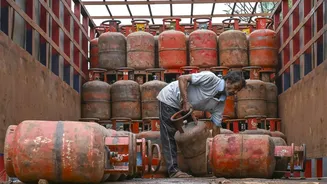








Amid the sharpening crisis of Liquified Petroleum Gas (LPG), India is moving towards the United States (US) as an alternative amid the West Asia conflict
that has choked crude and gas supplies via the Strait of Hormuz. The disruptions in West Asia have temporarily sidelined a region that represents nearly 30 per cent of worldwide LPG availability. According to estimates by S&P Global Energy, India's domestic production supplies about 41 per cent of the country's LPG demand, while the remaining volumes are imported. The Gulf region accounts for 60 per cent of India's LPG consumption. Given the disruption, US LPG loadings destined for India are increasing, with volumes now surpassing those from traditional Gulf suppliers, it said. Also Read: Why India’s ‘Two To Three’ Weeks Of LPG Inventory Remains A Concern? The S&P Global Energy note said that India's weekly LPG imports fell to 265,000 mt in the week to March 19, from 322,000 mt on March 5. West Asia inflows to India declined to just 89,000 mt in the week to March 19, representing only 34 per cent of total imports, the lowest share since January. Alternative regional supplies increased to 176,000 mt in the week to March 19, up from zero the previous week when West Asia accounted for 100 per cent of imports. As per the reports, in 2026, Indian oil marketing companies secured a term tender for 2.2 million mt of US-origin LPG. India imported nearly 480,000 mt of US-origin LPG in the first two months of 2026, corresponding to around 11 VLGCs. In a separate development, amid the West Asia tensions, the Indian government is exploring the creation of a dedicated Rs 1,000 crore fund to support insurers offering war-risk coverage for ships operating through high-risk waters such as the Strait of Hormuz. In the first half of March, LPG consumption saw a steep decline. As per the preliminary industry data, the LPG consumption fell 17.7% year-on-year to 1.147 million tonnes during March 1–15, compared with 1.387 million tonnes in the same period last year. It was also down 26.3% from 1.557 million tonnes recorded in the first half of February.