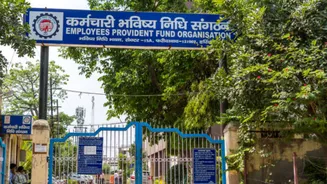








The Employees’ Provident Fund Organisation (EPFO) has introduced a simplified framework for partial withdrawals, making it easier for members to tap their
provident fund savings during financial emergencies and major life events. The revised rules cover situations including unemployment, medical expenses, education and housing requirements. Under the updated EPF framework notified last month, members can access up to 75 per cent of their provident fund balance for eligible needs. The remaining 25 per cent stays invested in the account, preserving a portion of the retirement corpus for future financial security. Another major change is the standardisation of the minimum membership period for most advance EPF withdrawals. Members generally need at least 12 months of membership, replacing the earlier system in which eligibility requirements varied significantly across different withdrawal categories. EPFO Consolidates 13 Withdrawal Categories Into Three The revised framework brings greater uniformity to EPF advance claims. Earlier, members had to navigate 13 separate withdrawal categories, each carrying its own eligibility conditions and service requirements. The new system groups withdrawals into three broad classifications:
- Essential needs: This includes medical treatment, education and marriage-related expenses.
- Housing needs: Members can use their PF savings for purchasing, constructing, repairing or renovating a house or property, along with certain housing loan-related requirements.
- Special circumstances: Members can withdraw up to 75 per cent of their PF balance under this category without specifying a particular reason.
EPF Withdrawal After Losing Your Job
Unemployment is among the most significant areas affected by the revised withdrawal rules. Employees who leave their jobs without another employment opportunity, or become unemployed for another reason, can now access up to 75 per cent of their EPF balance immediately after becoming unemployed.
The remaining 25 per cent is not available immediately. Members have to remain continuously unemployed for 12 months before they can access that portion of the balance.
This marks a shift from the previous EPF Scheme, 1952. Under the earlier provision, members who remained unemployed for two months after leaving employment could withdraw their entire PF balance. The provision was frequently used by workers between jobs to meet expenses during periods without income.
Medical Expenses Covered Under Essential Needs
Medical treatment has been brought under the essential-needs category in the simplified framework. This gives members a route to use their accumulated PF savings when they face significant or urgent healthcare-related expenses.
The revised provisions also differ from certain other withdrawal categories in terms of frequency. Medical-related advances are not subject to a fixed limit on the number of times a member can make such a claim, provided the applicable conditions under the scheme are satisfied.
For members facing substantial medical expenses, the change could therefore provide additional flexibility compared with a framework where individual withdrawal categories carried different restrictions.
Education And Marriage Withdrawal Limits
The new rules continue to provide access to PF savings for education and marriage, while specifying limits on how frequently these advances can be claimed.
For education-related expenses, members can make withdrawals up to 10 times during their EPF membership. Marriage-related withdrawals, meanwhile, can be made up to five times under the notified framework.
The amount that a member can ultimately withdraw remains linked to the PF balance and the conditions applicable to the particular category of advance.
EPF Interest Rate Remains At 8.25%
While the withdrawal framework has changed, the EPF interest rate for financial year 2025–26 remains 8.25 per cent per annum. The interest was processed and credited to more than 34 crore member accounts on July 15, 2026, according to the government announcement cited in the source material.
The revised withdrawal rules are aimed at making PF savings more accessible when members face pressing financial requirements, while retaining a portion of the accumulated corpus for their longer-term needs.
For EPF members, the key takeaway is that the new framework provides a more streamlined structure for advances, with a broad 75 per cent withdrawal provision and a standardised 12-month membership requirement for most eligible withdrawals.