





What is the story about?
Film photography has seen a resurgence, particularly among younger generations who appreciate its distinct aesthetic and analog charm. Despite this renewed
interest, many young photographers find analog cameras more challenging to operate than their digital counterparts, prompting questions about key concepts like ISO and f-stop.
Introduction to Film Photography
George Walker IV, an Associated Press photojournalist based in Nashville, provided insights into the fundamentals of film photography for this edition of One Tech Tip.Having joined the AP in 2023 after three decades at The Tennessean, Walker emphasized that shooting on film encourages patience and a focused approach to capturing significant images.
Understanding Film and Its Functionality
Prior to the digital era, photography relied heavily on physical film instead of digital memory storage.This light-sensitive cellulose material captures images by exposing a silver-halide coating through the camera lens, creating latent images used for prints.
The unique grainy quality of film appeals to enthusiasts who prefer its unfiltered nature over the perfection often associated with digital photography. This trend is part of a broader revival of traditional hobbies, including vinyl records and letter writing.
Key Considerations When Using Film
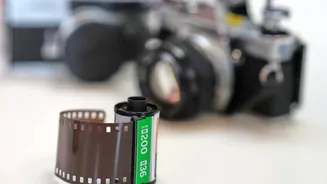
The most common format for consumer cameras is 35 mm film, which is sold in canisters at photography stores and online, though availability at drugstores may vary.When purchasing film, it is essential to consider the ISO rating, which indicates the film's sensitivity to light; higher ISO numbers denote greater sensitivity.
In low-light environments, such as gyms or nighttime sports events, an ISO rating of 1600 or higher is preferable, while full sunlight conditions are best suited to ISO 400 or lower.
Beginners may benefit from using black and white film, which is more forgiving of exposure mistakes and encourages attention to composition and lighting.
Selecting a Film Camera
New film cameras are now limited to select point-and-shoot, niche, or high-end models.However, numerous vintage cameras are available on platforms like eBay or at local camera shops. It is advisable to inquire among friends or family for any old cameras they may no longer use.
Opt for models from prominent manufacturers such as Canon, Nikon, Pentax, Olympus, or Minolta, which were dominant before the digital shift.
Choosing the Right Type of Film Camera
Point-and-shoot cameras are compact, affordable, and user-friendly, typically featuring minimal controls.Single-lens reflex (SLR) cameras allow for full manual operation, offering extensive control over settings and lens options. While ideal for those looking to learn and experiment, SLRs can be intimidating for novices due to their complexity.
Ultimately, the best camera is the one you have on hand, regardless of its type.
Loading Film into Your Camera
Once you have your film and camera, it’s time to load the film.In manual cameras, open the back, insert the film leader into the right spool, and use the winding lever to secure it. Close the camera back and ensure the rewind knob turns, indicating correct loading.
Point-and-shoot cameras often feature automatic film winding, with instructions inside for proper loading. Failing to load correctly may result in error messages or a non-functioning film counter.
Keep the camera back closed until all exposures are complete and the film is rewound into the canister to avoid ruining the roll.
Mastering Camera Functions and Focus Techniques
For those using manual cameras, learning to control exposure through shutter speed and aperture, or f-stop, is crucial.Think of exposure control like managing water flow; f-stops regulate light entering the camera, while shutter speed determines how long the light is allowed in.
F-stops also influence depth of field, with smaller f-stop numbers resulting in a greater focus area.
Shutter speed is vital for capturing motion, with faster speeds effectively freezing action.
Manual cameras typically feature a light meter to assist with exposure accuracy. Additionally, focusing requires practice; prioritize sharpness in the eyes for portraits and key elements in landscapes.
Despite technological differences, the fundamental principles of photography remain consistent. The primary rule is to fill the frame with your subject, and studying the works of renowned photographers can provide valuable insights.
Processing Film After Shooting
Film can be processed at local drugstores, photography shops, or sent to online labs. Some cities also offer community darkrooms for shared use.The cost and time for processing depend on factors such as speed of service, film type, and additional services requested.
Negatives, the developed film strips, can also be retrieved. While many now opt for digital files, experienced photographers often retain negatives for potential future prints.