







Imagine trying to keep up with global politics in 2025 -- nearly impossible. One moment the world was grappling with tariff storms from Washington, the next
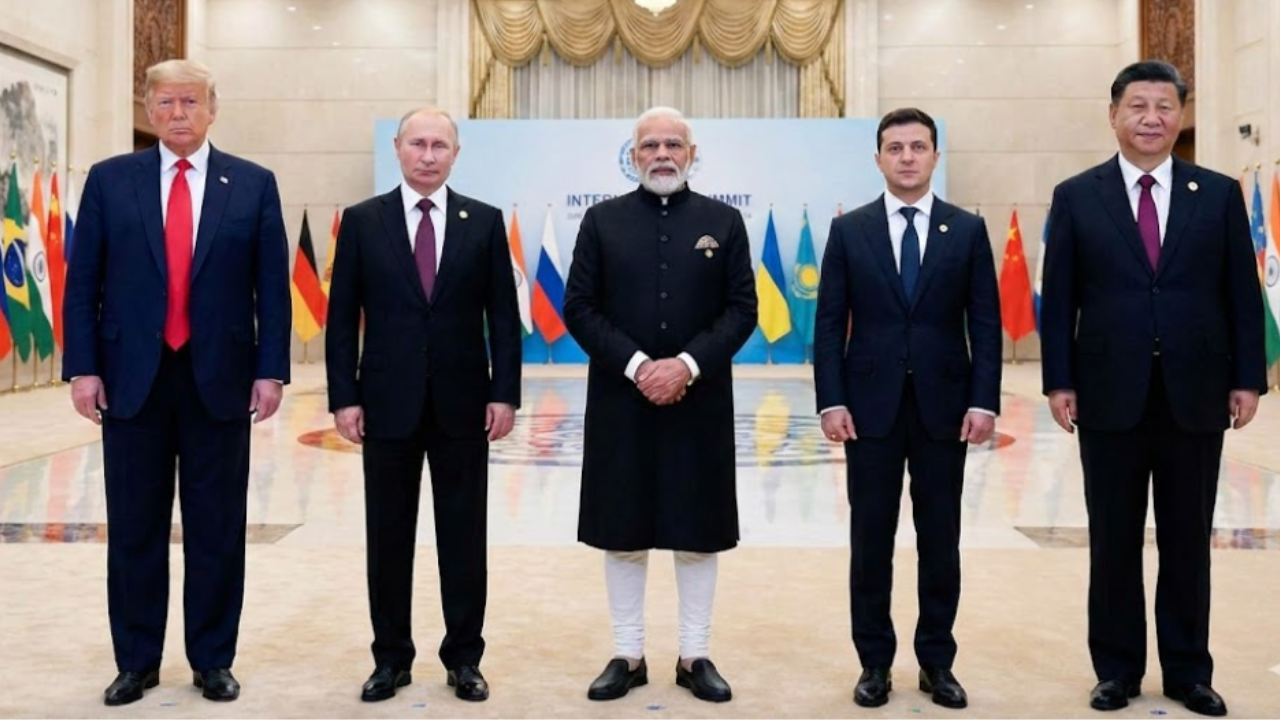
it was recalibrating to Russia’s diplomatic manoeuvres or China’s economic shockwaves. In the middle of it all, leaders from New Delhi to Kyiv tried to hold their ground and chart a course through the chaos. These weren’t just political developments; they were plot twists in a year that read like a geopolitical thriller. And at the centre of this whirlwind were five leaders who shaped the world’s biggest conversations, for reasons both celebrated and controversial. Here’s a look at five politicians who dominated headlines in 2025 -- sometimes for the right reasons, sometimes wrong ones, but always in ways that mattered.
1. Donald Trump: The Tariff Warrior Who Rewrote Global Trade
Back in the Oval Office, Donald Trump was once again the planet’s biggest news generator. His sweeping tariff decisions rattled allies, disrupted supply chains and rewired the global trading system overnight. From India and Europe to China and Mexico, nobody escaped the ripple effects of his “America First, Again” doctrine.
Throughout the year, Trump mixed confrontation with last-minute diplomacy, like the partial tariff truce with China that briefly calmed global markets. But every announcement, lawsuit, or retaliatory threat coming out of Washington guaranteed headline spikes across 2025.
- Trump brought back the 25% tariff on steel and 10–25% tariff on aluminium.
- By June 2025, he doubled down and raised these tariffs to 50% for most countries.
- Trump announced a flat 10% tariff on all imports, no matter the country.
On top of this, he introduced “reciprocal tariffs”: countries with a large trade surplus with the US faced extra duties, sometimes pushing tariffs above 20–40%.
Through Executive Order 14245, Trump imposed a 25% tariff on any country that buys Venezuelan oil. This was a major shift - tariffs were now being used as a foreign-policy tool, not just for trade.
2. Vladimir Putin:The Power Player Seeking Peace on His Terms
The Russia–Ukraine war kept Vladimir Putin at the heart of global attention, but 2025 added new layers. He pushed aggressively on the diplomatic front - responding to US-proposed peace drafts and deepening energy and defence ties across Asia.
Putin’s high-profile visit to India in December became a defining moment in regional geopolitics. From securing energy routes to discussing alternative payment systems, he used the trip to showcase that Moscow’s global footprint remains intact despite sanctions and isolation in the West.
Intensified the Ukraine War
Russia pushed major winter and spring offensives in eastern Ukraine, especially around Avdiivka, Kupiansk, Donetsk and Kharkiv regions. Moscow increased its use of drones, glide bombs, long-range missiles and deeper strikes on Ukrainian cities. Russia also expanded recruitment through volunteer units, regional militias and migrant communities.
Deepened Alliance With China
2025 saw Russia–China ties strengthen further:
- increased energy exports
- joint infrastructure and Arctic projects
- expanded military cooperation
China became Russia’s biggest lifeline for tech, trade and sanctions circumvention.
Strengthened Ties With Iran & North Korea
Russia received:
- ballistic missiles and ammunition from North Korea
- drones and military components from Iran
- In return, Russia offered tech support, energy deals and diplomatic backing.
Countered Western Sanctions
Moscow built alternative financial channels using:
- Yuan-based trade
- Middle-East intermediaries
- Shadow fleets for oil
Built a New Anti-West Political Bloc
Putin used 2025 to deepen relations with “non-Western partners”:
- India (energy, weapons components)
- Gulf countries
- Southeast Asia
3. Narendra Modi: The Diplomat-in-Chief Balancing Giants
Towering over India’s 2025 news cycle, Prime Minister Narendra Modi found himself navigating one of the trickiest international landscapes of his tenure. With Trump’s tariffs unsettling global trade and Russia cementing its presence as India’s top energy supplier, PM Modi spent much of the year balancing competing powers without derailing India’s economic trajectory.
The Modi–Putin summit in Delhi became a headline moment, capturing India’s tightrope walk between Washington and Moscow. As markets fluctuated and exporters scrambled, PM Modi’s every foreign policy move was dissected for what it signalled about India’s long-term strategy.
Response to Pahalgam Attack
On 22 April 2025, terrorists attacked a tourist spot in Pahalgam, killing 26 civilians. PM Modi personally oversaw the government response: heightened security, intelligence operations and border vigilance. Visa cancellations, expulsion of Pakistani advisers and temporary suspension of key treaties were implemented to press Pakistan diplomatically.
Operation Sindoor
On 7 May 2025, India launched precision strikes on nine terrorist infrastructure sites in Pakistan and PoK. Over 70 terrorists were neutralised, civilian areas and Pakistani military installations were avoided. PM Modi granted full operational freedom to the armed forces and coordinated the mission.
Security & Counter-Terrorism
Strengthened security along LoC, Punjab border, and key cities. Cracked down on domestic terror networks and groups linked to Pakistan-backed militancy.
Strategic Diplomacy
Deepened ties with USA, Russia, and Middle East countries (energy, defence, tech cooperation). Balanced global diplomacy while safeguarding Indian interests amid global tensions (Ukraine war, US tariffs, Pakistan instability).
Defence & Military Modernisation
Oversaw missile and drone tests, air-defence upgrades and space tech advancements. Promoted “Atmanirbhar Bharat” in defence and domestic manufacturing.
Domestic Economy & Infrastructure
Pushed Vande Bharat train network expansion, highways, and logistics corridors. Continued support for semiconductor and tech manufacturing, boosting economic growth and employment.
Political Leadership
Managed domestic political challenges, including protests, inflation and opposition scrutiny. Maintained a strong public image through decisive crisis handling, especially post-Pahalgam attack.
4. Volodymyr Zelenskyy: The Wartime President Who Refused to Fade
For a third consecutive year, Volodymyr Zelenskyy stayed firmly in global headlines. With intense fighting on the ground and diplomatic negotiations off it, Zelenskyy’s leadership continued to shape Europe’s security landscape.
His frequent engagements with Western leaders, mixed with battlefield updates and responses to peace proposals, made him one of the most visible political figures of 2025. Even as war fatigue set in across parts of the West, Zelenskyy remained relentless in pushing Ukraine’s narrative on the global stage.
Leadership in the Ukraine War
Continued commanding Ukraine’s defence against Russia’s intensified offensives, particularly in eastern and southern regions. Oversaw large-scale mobilisation, including reservists and territorial defence forces, to counter Russian assaults.
Coordinated drone strikes, counter-artillery operations and city defences in key areas like Bakhmut, Donetsk and Zaporizhzhia.
Strengthened Western Alliances
Secured additional military aid from the US, EU and NATO partners: tanks, fighter jets, advanced missiles and intelligence-sharing. Advocated for long-term strategic support, including training and logistics assistance for Ukrainian forces. Maintained pressure on Western nations for sanctions against Russia and expanded diplomatic engagement.
Domestic Governance
- Focused on civilian protection, reconstruction and humanitarian aid in conflict zones.
- Launched initiatives to maintain national unity and morale, including communication campaigns and direct outreach to citizens in war-affected areas.
- Strengthened cyber defence and critical infrastructure protection against Russian cyber-attacks.
Economic and Energy Measures
- Secured foreign financing and loans to sustain the economy under wartime conditions.
- Diversified energy imports and strengthened renewable energy programs to reduce reliance on Russian energy.
- Supported export strategies for agriculture and tech despite ongoing war disruptions.
Global Diplomacy and Image
- Zelenskyy remained a high-profile global figure, addressing the UN, G20 and EU summits.
- Advocated for Ukraine’s integration into European institutions and pushed for international recognition of Russian aggression.
- Engaged in diplomatic outreach to Asia, Africa, and Latin America to expand support beyond Western allies.
Special Operations and Military Innovation
- Oversaw precision strikes and sabotage missions against Russian positions and supply lines.
- Promoted domestic innovation in drone warfare, artillery accuracy, and intelligence-based strikes.
- Coordinated with allied nations to acquire modern equipment for counteroffensives.
5. Xi Jinping: The Leader Pulling Global Supply Chains by a Thread
Whether it was rare-earth export controls, tech regulations or sweeping internal crackdowns, Xi Jinping’s 2025 decisions reverberated far beyond China’s borders. From Silicon Valley to Seoul, every policy tweak sparked commentary and often panic.
His late-2025 move to streamline China’s rare-earth export licensing system was one of the year’s biggest economic stories, reshaping critical mineral flows at a time when the US and its allies were scrambling to secure alternatives. As always, Xi’s quiet but powerful domestic decisions carried loud global consequences.
Strengthened China’s Global Position
- Promoted Belt and Road Initiative projects in Asia, Africa, and Europe, emphasising infrastructure and digital connectivity.
- Increased influence in global trade forums, pushing back against U.S. and Western tariffs and sanctions policies.
- Expanded China’s role in UN peacekeeping and multilateral initiatives to assert a leadership image.
Military Modernization and Regional Assertiveness
- Accelerated PLA (People’s Liberation Army) modernisation: advanced missile systems, aircraft, naval vessels, and cyber capabilities.
- Conducted military drills near Taiwan, South China Sea, and East China Sea, signaling readiness and territorial control.
- Strengthened coastal defences, missile deployments, and air/naval patrols to deter U.S. and allied influence in the region.
Taiwan and Regional Policy
- Increased political and economic pressure on Taiwan while continuing naval and air incursions in surrounding waters.
- Promoted diplomatic isolation of Taiwan globally, while urging unification rhetoric under the “One China” principle.
- Expanded partnerships with Russia and regional allies to counter Western influence in Asia.
Domestic Governance & Economic Stability
- Oversaw policies to maintain social stability, tech self-reliance and economic growth amid global trade tensions.
- Strengthened state-owned enterprises, semiconductor initiatives, and renewable energy programs.
- Cracked down on anti-corruption and dissent to maintain CCP control and ensure political stability.
Russia-Ukraine War Stance
- Maintained a neutral-but-strategic position: providing diplomatic support to Russia in some forums while maintaining trade ties with Europe and the U.S.
- Advocated for negotiated peace publicly, balancing relations with both Russia and the West.
- Facilitated energy and technology deals that indirectly supported Russia’s war economy without direct involvement.
Diplomacy and Global Leadership
- Advanced China’s influence in Africa, Middle East, and Latin America through trade, loans, and infrastructure projects.
- Promoted China-led multilateral institutions to reduce reliance on Western-led systems (IMF, World Bank).
- Hosted high-profile BRICS+ and Shanghai Cooperation Organisation (SCO) meetings to consolidate global partnerships.
Politics in 2025 didn’t just make news, it rewired economies, alliances and global expectations. These five leaders shaped the world’s biggest conversations, not because they always wanted to, but because their decisions left no room for silence.