






What is the story about?
Kamchatka Peninsula in Russia's Far East is facing an intense winter whiteout as continuous storms dump metres of snow across the region, disrupting daily
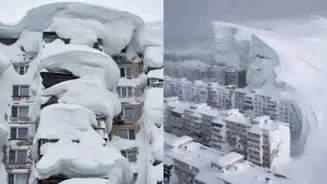
life and putting pressure on basic infrastructure. Videos and images shared online show homes, roads and vehicles almost completely buried under massive snowbanks after snowfall continued for nearly four days without stopping. In Petropavlovsk-Kamchatsky, the capital of Kamchatka Krai, authorities have said road conditions are "critical" following repeated spells of heavy snow, ice and strong winds, according to The Moscow Times.
Meteorologists say the amount of snow recorded since early January is unprecedented for the region and has not been seen in over 50 years.
Average snow depth in the city has reached around 170 cm, while snowdrifts in some neighbourhoods have crossed 2.5 metres.
In several areas, snow has piled up even higher, blocking building entrances and almost completely burying parked cars.
Also Read: Netanyahu Issues Stark Warning to Iran: ‘Will Act With a Force It Has Not Yet Known
Residents have been forced to dig tunnels and narrow pathways just to step outside. Visuals show people shovelling snow off vehicles covered under several feet of accumulation.
Even as life remains disrupted, some moments of normalcy have emerged. Russian children were seen sliding down large piles of snow near multistorey buildings, while others were spotted snow-gliding and diving into deep drifts formed by the storms.
At its peak, snowdrifts in parts of Kamchatka have reached up to five metres (16 feet).
The extreme conditions have also turned deadly. City authorities declared a state of emergency after at least two elderly men were killed by snow falling from rooftops last week, The Moscow Times reported.
Officials have warned that heavy snow and icicles on roofs continue to pose serious risks, while ongoing snowfall has increased avalanche concerns in residential areas.
What's Behind The Snowfall?
Weather experts say the extreme conditions are being driven by repeated cyclonic systems forming over the Pacific Ocean, combined with Kamchatka's geography. These storms are pulling in large amounts of moisture from the ocean, which turns into heavy snowfall when it meets the region’s freezing temperatures.
Kamchatka lies between the Pacific Ocean and the Sea of Okhotsk. Its mountain ranges force moist air to rise quickly, increasing snowfall. This winter, storms have arrived one after another, leaving little time for snow to settle or melt before fresh layers accumulate.
Climate Change Factor
Scientists have also pointed to climate change as a contributing factor. Warmer oceans, caused by global warming, can hold more moisture. This increases the chances of heavy snowfall in regions that already experience extreme cold. As the climate warms, intense winter events such as heavy snow, rain and fog are becoming more common in different parts of the world.
For residents of Kamchatka, this winter has highlighted how unpredictable and severe weather can be. Even in a region used to long and harsh winters, the scale of this year’s snowfall has pushed daily life, safety systems and infrastructure to their limits, reinforcing the need for stronger climate adaptation measures.