








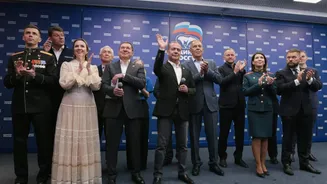
Russia's parliamentary election has entered its second day amid reports of cyberattacks targeting voting systems and communication lines across the country.
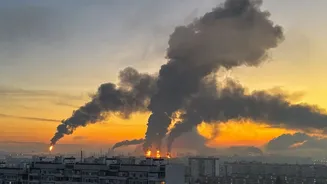
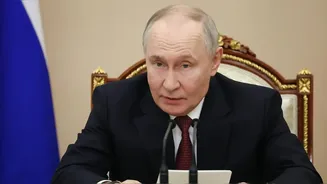
On Saturday authorities said the online voting system in Moscow had been subjected to a strong attack overnight, but said the situation was under control. The attacks were continuing, Central Election Commission (CEC) Chairwoman Ella Pamfilova was cited as saying by state media, but all were being successfully repelled. Russia's digital ministry said it had registered a sabotage attempt on communication lines in the country's Far East, but that the attack had been thwarted and all communication had been restored, state media reported, according to Reuters. President Vladimir Putin earlier accused Ukraine of trying to interfere with the vote.
Why the elections matter for Russia
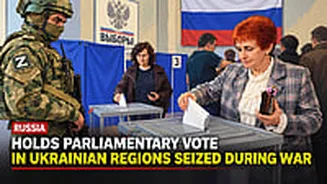
The September 18–20 poll is the first State Duma election since Moscow launched its full-scale war in Ukraine, putting the vote under heightened scrutiny as the Kremlin seeks to project public support for its wartime agenda.
The ruling pro-President Vladimir Putin United Russia party is widely expected to retain its dominance in Russia's tightly controlled political system, while authorities have framed the election as a test of stability and public sentiment more than four years into the war.
Most anti-war candidates were excluded from the ballot before voting across Russia's 11 time zones got under way, after the Supreme Court ruled last month that the liberal Yabloko party — which wants a ceasefire in Ukraine — had breached electoral rules, something it denied.
Some Yabloko candidates, however, are still contesting single-member constituencies, which account for half of the 450 seats in the lower house of parliament. The party has traditionally polled in the single digits.
Nationwide turnout as of 1400 local time on Saturday (1100 GMT) stood at 32.58%, according to CEC data cited by state media.
In Moldova's separatist pro-Russian Transdniestria region, the election triggered a diplomatic dispute with Chisinau over its objections to the Kremlin's plan to open 15 polling stations for Russian nationals there. Moscow says the 220,000 residents of Transdniestria, a sliver of land which broke away from Moldova in 1990 at the end of Soviet rule, hold Russian passports and are entitled to vote.
(With agency inputs)