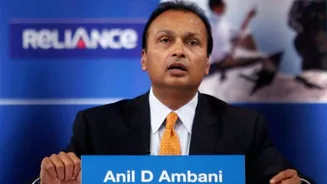

The Enforcement Directorate (ED) on Monday intensified its scrutiny of financial dealings involving the Anil Ambani-led Reliance Group by questioning YES
Bank co-founder Rana Kapoor in connection with a money laundering probe. Officials familiar with the matter said Kapoor’s statement is being recorded under the provisions of the Prevention of Money Laundering Act (PMLA), marking a significant development in the long-running investigation, according to a PTI report. The inquiry focuses on a series of high-value investments made by YES Bank in Reliance Group financial entities during a critical two-year window, raising questions about risk assessment, regulatory compliance, and the ultimate destination of public funds, the report added. High-Value Investments Under The Scanner According to investigators, the probe relates to the period between 2017 and 2019, when YES Bank allegedly invested Rs 2,965 crore in instruments issued by Reliance Home Finance Ltd (RHFL) and Rs 2,045 crore in Reliance Commercial Finance Ltd (RCFL). By December 2019, these investments had reportedly deteriorated into non-performing assets, triggering alarm within regulatory and enforcement circles, added the report. Officials claim that the financial exposure left substantial dues unpaid. The outstanding amount stood at Rs 1,353.5 crore in the case of RHFL and Rs 1,984 crore for RCFL. The ED further stated that the two Reliance entities together received public funds exceeding Rs 11,000 crore, intensifying concerns about potential misuse of investor money, the report states. Alleged Indirect Flow Of Mutual Fund Money The agency has also highlighted the role of other financial institutions in the broader transaction trail. Investigators are examining whether funds originating from mutual fund schemes were indirectly channelled into Anil Ambani group companies through YES Bank’s investments. "Before YES Bank invested this money in Reliance Anil Ambani group companies, YES Bank had received huge funds from the erstwhile Reliance Nippon Mutual Fund. As per SEBI regulations, Reliance Nippon Mutual Fund could not invest/divert funds directly in Anil Ambani group finance companies due to conflict-of-interest rules," the ED said, as per the report. These regulatory restrictions, the agency noted, were designed to prevent conflicts of interest and protect retail investors from undue risk exposure. Based on its findings so far, the ED alleges that public money parked in mutual fund schemes may have been routed through a layered structure. Investigators claim the pathway of these funds ran through YES Bank’s financial exposure to the Reliance group, effectively bypassing direct investment restrictions, states the PTI report.