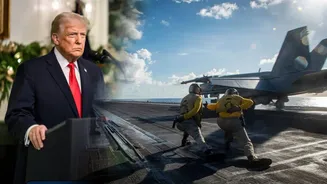



The United States has signalled a renewed show of military force in the Middle East after President Donald Trump said an American “armada” was moving toward
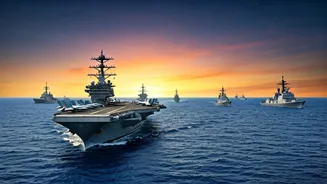
Iran. Speaking to reporters aboard Air Force One while returning from the World Economic Forum in Davos, Trump said the deployment was intended as a deterrent rather than a declaration of war. “We have a massive fleet heading in that direction,” Trump said, adding that the United States was watching Iran “very closely,” according to Reuters. He stressed that Washington would prefer not to use force but wanted to be prepared if tensions escalated.
#WATCH | US President Donald Trump says, "We have a big flotilla going in that direction, and we'll see what happens. We have a big force going toward Iran. I'd rather not see anything happen, but we're watching them very closely..."
He adds, "...837 mostly young men were going… pic.twitter.com/KRSM7VPPHq— ANI (@ANI) January 23, 2026
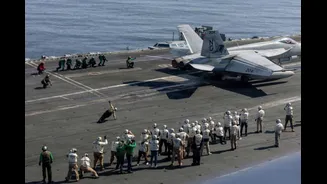
US officials, speaking on condition of anonymity, confirmed to Reuters that the aircraft carrier USS Abraham Lincoln and several guided-missile destroyers are expected to arrive in the Middle East in the coming days. The same officials said additional air-defence systems are under consideration to protect US forces and bases in the region.
US Military Deployment and Nuclear Warnings
The deployments come amid heightened concern in Washington over Iran’s internal unrest and the possibility that Tehran could restart elements of its nuclear programme. Trump said the military posture was meant to ensure the United States had credible options available, adding that he hoped they would not need to be exercised.
Trump also renewed warnings to Iran over its nuclear activities, saying the United States would respond if Tehran resumed uranium enrichment. “If they try to do it again, they have to go to another area. We’ll hit them there too, just as easily,” Trump said, referring to past US actions against Iran’s nuclear infrastructure, according to comments carried by Reuters.
The US president further claimed that earlier American threats had pressured Iran into halting executions of protesters. “I said, ‘If you hang those people, you’re going to be hit harder than you’ve ever been hit,’” Trump said, adding that Iran had subsequently slowed its execution plans, though this assertion has not been independently verified.
US officials said the latest military movements reflect a broader effort to deter Iran without committing Washington to a direct confrontation. Analysts note that the deployment of naval assets and air-defence systems is consistent with past US responses during periods of elevated tension with Tehran.
Iran’s Response and Protest Death Toll Dispute
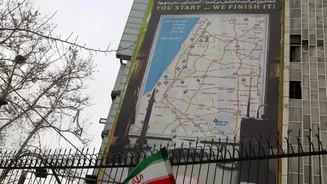
Iranian officials responded sharply to Trump’s remarks. General Mohammad Pakpour, commander of the Islamic Revolutionary Guard Corps, warned the United States and Israel against what he described as “miscalculations,” saying Iranian forces had their “finger on the trigger,” according to a statement cited by AFP.
🇮🇷🇺🇸🇮🇱 The commander of the IRGC, General Mohammad Pakpour, joined the ranks of Iranian leaders who have issued warnings to Israel and the United States about a possible military strike.
“We are ready for action. Our enemies, primarily the Zionists and the United States, need to… pic.twitter.com/wvQrWjcluk— Visioner (@visionergeo) January 22, 2026
“The Islamic Revolutionary Guard Corps and dear Iran are more prepared than ever, ready to carry out the orders of the supreme commander-in-chief,” Pakpour said, according to Iranian state television. His remarks were issued during a commemoration marking the Guards’ role in protecting Iran’s 1979 Islamic revolution.
Another senior Iranian official, General Ali Abdollahi Aliabadi, who heads Iran’s joint command headquarters, warned that any US attack would make “all US interests, bases, and centres of influence” legitimate targets, according to AFP. These statements underscore Tehran’s effort to project readiness while warning against escalation.
The military standoff is unfolding alongside one of the deadliest protest crackdowns in Iran in recent years. Iranian authorities on Wednesday released their first official death toll, saying 3,117 people had been killed during nationwide protests, according to figures published by Iran’s foundation for martyrs and veterans and cited by AFP.
President Masoud Pezeshkian said protest was “the natural right of citizens,” but added that authorities must distinguish between peaceful demonstrators and those responsible for violence, AFP reported. Rights organisations, however, dispute the government’s figures.
The Oslo-based group Iran Human Rights said it has verified at least 3,428 deaths, while the US-based Human Rights Activists News Agency reported 4,902 deaths and more than 26,500 arrests. Independent verification has been hampered by a nationwide internet shutdown that has lasted more than two weeks, according to internet monitoring group NetBlocks.