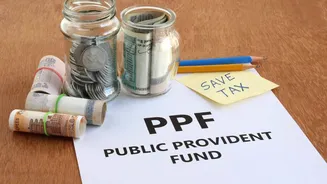










The Public Provident Fund (PPF) remains one of the most attractive long-term investment options in India, thanks to its tax-free returns and government-backed
security. It is designed as a disciplined savings tool as PPF allows individuals to build a corpus over time while enjoying tax benefits under Section 80C. Investors can contribute anywhere between Rs 500 and Rs 1.5 lakh annually, making it accessible to a wide range of savers. While PPF is primarily meant for long-term wealth creation, it also offers flexibility in times of financial need through a loan facility, something many investors may not fully utilise. A lesser-known feature of PPF is the ability to take a loan against your balance before maturity. This facility is especially helpful for individuals who need funds but do not want to break their long-term investment. A PPF loan can be availed between the third and sixth financial year after opening the account. During this period, withdrawals are not permitted, but account holders can borrow against their accumulated balance at relatively low interest rates. To apply, investors need to fill out Form D, available at their bank or post office, and submit it along with essential details such as the PPF account number, loan amount, passbook copy, and a declaration. Eligibility, Limits And Key Conditions Not all PPF investors can access this facility at any time. Only those within the eligible window, between the third and sixth year, can apply for a loan. The borrowed amount is capped at 25 per cent of the balance available at the end of the second financial year preceding the loan application year. This loan is short-term in nature and must be repaid within 36 months. Interestingly, if a borrower repays the loan early, they may be eligible to take another loan within the same six-year window. Interest Rates And Repayment Rules The interest rate on a PPF loan is relatively low, making it an attractive alternative to other borrowing options. If the loan is repaid within 36 months, the interest charged is just 1 per cent per annum. However, delays in repayment can significantly increase the cost, with the rate rising to 6 per cent per annum from the date of disbursement. Repayment is structured in two parts, first the principal, followed by interest, which can be cleared in up to two instalments. If any interest remains unpaid, it may be deducted directly from the PPF account balance. One important point to note is that the PPF balance does not earn interest during the repayment period, which can impact long-term returns. (Disclaimer: This article is meant solely for informational and educational purposes. The views and opinions expressed are those of individual analysts or brokerage firms and do not reflect the stance of Times Now. Readers are advised to consult certified financial experts before making any investment decisions.)