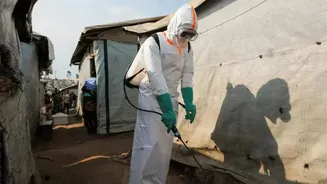









Confirmed Ebola infections in the Democratic Republic of Congo have climbed past 3,500, a grim milestone that now makes this the second largest outbreak
of the virus the world has ever documented. The DRC's Ministry of Communication and Media put the exact figure at 3,532 in a statement released Friday. That surpasses the country's own previous worst outbreak, one that stretched from August 2018 through June 2020 and topped out around 3,470 cases, Al Jazeera reported. Numbers alone don't capture what's alarming officials most. It's the pace. Carl Skau, who currently serves as acting head of the UN World Food Programme, put it bluntly to Reuters: nobody has seen an Ebola epidemic move this fast before. His message to the rest of the world was simple. Pay attention, and pay attention now.
Nearly Half of Those Infected Have Died
The death toll tells its own brutal story. Data from the Ministry of Public Health puts the number of fatalities at 1,556, which works out to a case fatality rate of 44.1 percent. Put another way, roughly 44 out of every 100 people who catch this virus in the current outbreak don't survive it.Hospitals and isolation units are still treating 807 active patients. Another 626 people have recovered and left care.
What's especially unsettling is the timeline. This outbreak is not yet three months old, and it has already killed five times more people than past outbreaks typically had claimed at the same stage, according to figures from the Africa Centres for Disease Control and Prevention.
Only One Outbreak Has Ever Been Bigger
Congo's crisis still trails one historical event. Between 2014 and 2016, Ebola tore through Guinea, Liberia and Sierra Leone in what remains the deadliest outbreak on record, with the World Health Organization documenting 28,616 cases and 11,310 deaths across those three West African nations.No Vaccine, No Treatment, and a War Zone to Work In
Part of what makes this outbreak so hard to contain comes down to the strain itself. This is the Bundibugyo variant of Ebola, a rarer form of the virus that currently has no approved vaccine and no approved treatment, which strips doctors of tools they'd normally rely on.Then there's the setting. Eastern DRC, where much of this outbreak is unfolding, is crawling with dozens of armed groups. Health workers there have had to deal with actual attacks on medical facilities, not just the logistical nightmare of running a response in an active conflict zone. Deep cuts to foreign aid funding have only added to the strain, leaving response teams with fewer resources at the exact moment they need more.
Even trust is working against containment efforts. Many communities remain skeptical of government authorities, and gaps in public understanding of how Ebola spreads have made it that much harder to get people to cooperate with health workers trying to stop the outbreak in its tracks.