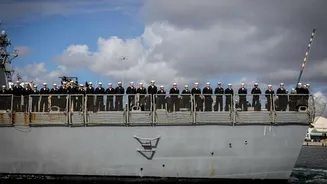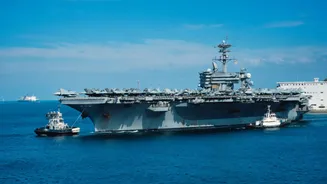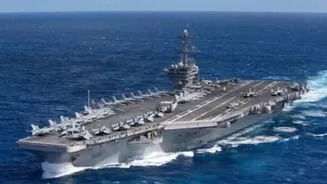








Tehran: A third US aircraft carrier strike group has arrived in the Middle East, a US official told ABC News. The USS Theodore Roosevelt carrier strike group entered
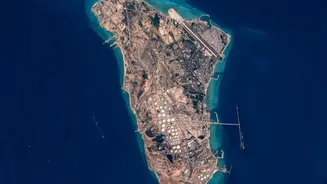
the US Central Command's (CENTCOM) area of operations early Sunday, according to the official. It joins the USS George H W Bush and USS George Washington carrier strike groups, which are currently deployed in the Arabian Sea. The three carrier groups are part of a larger US naval presence, with more than 20 Navy vessels involved in enforcing the blockade of Iranian ports. The deployment marks a significant build-up of US naval forces in the Middle East, strengthening Washington's ability to monitor maritime activity, support military operations and maintain pressure on Iran. The move comes against the backdrop of the ongoing US-Israel-Iran conflict, which began with American and Israeli strikes on Iran on February 28, 2026. As part of its broader strategy to increase economic pressure on Tehran, Washington has deployed naval forces to restrict Iran's maritime trade. The US imposed the blockade on April 13, 2026, after nuclear negotiations broke down. The restrictions cover commercial vessels travelling to or from Iranian ports and coastal areas, including those along the Arabian Gulf and the Gulf of Oman. 'Still In State Of War': Iran's Deputy FM Iran's Deputy Foreign Minister Kazem Gharibabadi said Tehran was prepared to face three possible scenarios in its dealings with the United States: diplomatic talks, an economic blockade or military aggression. He added that Iran remained in a state of war. Speaking to Iran's official state news agency IRNA in a televised interview on Sunday, Gharibabadi accused Washington of repeatedly failing to honour its diplomatic commitments, saying this had eroded Tehran's trust in the US as a negotiating partner. "The US has shown its bad faith at least three times over the past year and a half. This shows that the US cannot be trusted at the diplomacy table," Gharibabadi said. He also said the new US military equipment and forces deployed in the region following the previous understanding needed to be addressed. He urged Washington to take practical steps on the matter. Gharibabadi said Tehran had initially proposed a seven-day period to implement its plan to end the war and reopen the Strait of Hormuz. However, following two months of discussions with mediators, the proposed timeline was reduced to 48 hours. "This means the measures could be carried out within two days and ultimately lead to the reopening of the Strait of Hormuz," he said, adding that the proposal was currently on the table.