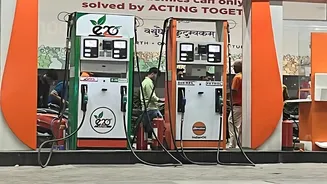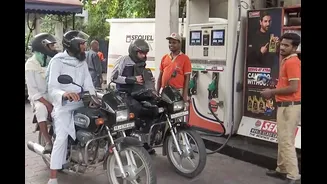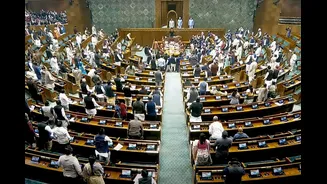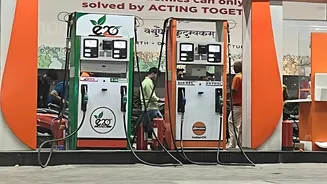






The Union Government ruled out any rollback of E20 petrol and told Parliament that it has not taken any decision to increase ethanol blending beyond 20 per
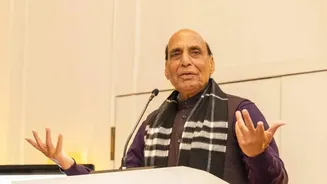
cent. Replying to a question in the Rajya Sabha, Union Minister of State for Petroleum and Natural Gas Suresh Gopi said E20 is a cleaner fuel and the government's focus is on moving towards better fuel technology rather than reverting to lower-standard fuels. He clarified that any future decision to increase ethanol blending beyond 20 per cent would be taken only after scientific studies and consultations with stakeholders. The minister made it clear that the government has no proposal to reintroduce non-blended petrol at retail outlets. The clarification comes amid demands from some motorists and sections of the automobile community to continue selling pure petrol alongside E20.
Concerns Over E20 Fuel
Since E20 was rolled out across the country, some vehicle owners have claimed that the higher ethanol blend affects mileage and may impact engine performance, particularly in older vehicles not originally designed for E20 fuel.
Concerns relating to fuel pump wear, corrosion and water contamination have also surfaced on social media and in public discussions.
Government's Response
Addressing these concerns, Gopi told Parliament that the government has not received any widespread or substantiated complaints from vehicle manufacturers, automobile associations or consumer organisations regarding engine failure, fuel pump issues, corrosion, water contamination or other performance problems attributable to E20 fuel.
He said the government has taken note of concerns raised in the media and on social media, but these have been scientifically examined and no evidence has been found to suggest widespread issues caused by E20 petrol. The minister reiterated that the Centre has no plans to roll back E20 and has not taken any decision to move beyond 20 per cent ethanol blending.
Benefits Of Ethanol Blending
The government also highlighted the gains made under the Ethanol Blended Petrol (EBP) Programme since Ethanol Supply Year (ESY) 2014-15. According to the Centre, the programme hass saved over ₹1.97 lakh crore in foreign exchange, replaced nearly 316 lakh metric tonnes of crude oil, prevented around 952 lakh metric tonnes of carbon dioxide (CO₂) emissions and generated more than ₹1.66 lakh crore in additional income for Indian farmers.
The government said the programme has reduced India's dependence on imported crude oil, improved energy security and boosted farmers' incomes through the use of ethanol produced from sugarcane, maize and other agricultural feedstock.
The Centre maintained that it remains committed to cleaner fuel technologies and will continue strengthening the ethanol blending programme while relying on scientific evidence and stakeholder consultations for any future policy decisions.