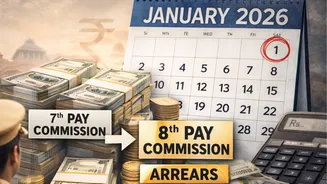










The Ministry of Finance has shared key details regarding the 8th Central Pay Commission (CPC) in response to a question raised in Lok Sabha. The updates
cover proposed revisions in pay scales, allowances, pension structures, and the broader roadmap for implementing these recommendations. Member of Parliament A Raja had inquired about the Commission’s focus areas, including changes to salaries, allowances, pensions, the timeline for the submission of its report, and the expected fiscal impact on the Union Budget. Pankaj Chaudhary, Minister of State for Finance, confirmed that the government issued a resolution on November 3, 2025, to constitute the 8th Pay Commission and appoint its chairperson and members. The Commission is tasked with submitting its recommendations on central government employees’ pay, pensions, and allowances within 18 months of formation. Assessing The Fiscal Impact Regarding the financial implications, the Minister of State for Finance stated that the effect of the 8th Pay Commission recommendations on the Union Budget will become clear only once the central government formally accepts them. This ensures that any fiscal planning aligns with the eventual policy decisions of the Commission. Structure And Submissions To The 8th Pay Commission The 8th Pay Commission has set up its office in New Delhi with the following key appointments: Ranjana Prakash Desai – Chairperson Pulak Ghosh – Part-time Member Pankaj Jain – Secretary Additionally, the Commission has invited applications for several administrative positions, including director, deputy secretary, under secretary, and other key roles. The Commission has opened online channels for memorandum submissions from unions, associations, institutions, and individuals, which will be accepted until April 30, 2026, via 8cpc.gov.in. A structured questionnaire with 18 questions is also available on MyGov.in for ministries, departments, judicial officers, pensioners, academicians, and employees of central and Union Territory governments, with responses due by March 31, 2026.