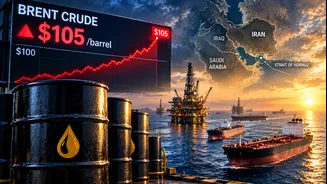








Brent crude oil has climbed to $105 a barrel on Thursday for first time since May 25, 2026. Chinese buying and Saudi Arabia reporting a sharp slump in oil output
also contributed to the crude surge. Brent crude futures were up 2.63%. Brent's latest rise also marks a significant turnaround for crude prices, which had traded well below the $100-a-barrel mark in the last 3 months. The renewed rally has heightened concerns for major oil-importing economies. Brent crude spot prices have averaged at about $85 per barrel in June, and around $83 in July. The price hovered around almost $91 in August. Notably, the Brent prices have surged 30% from lows touched in early August. The oil prices are reacting sharply as a permanent agreement between the United States and Iran to cease attacks never materialised and fighting resumed later in the month. After Iran-backed Houthi rebels in Yemen have threatened shipments from the kingdom’s west coast, Saudi Arabia’s oil production has fallen to its lowest this year.
Saudi Arabia oil production lowest since 1990:
According to a report published by the oil cartel, Saudi Arabia told Opec it produced 6.2 million barrels a day in August, the lowest monthly figure in 2026 and 23 per cent lower than in July.
Further, Saudi Arabia has informed OPEC that oil production dropped again, reaching the lowest since 1990.
Wait and watch: Experts on oil
On the next course for the crude oil prices, experts assess whether crude could cross $150 and the potential impact that could have.
Peter McGuire, Oil Expert & CEO-Australia, Trading.com told Times Now Digital "I don't think oil prices will hit 150 dollars per barrel at the moment. We will have to wait and watch. There's nothing driving prices up besides little bit of fear and long positions."
Global Commentator, Ajay Bagga said, "there will be massive demand destruction if price rises to $120-150. Economies will tip into recession and many downstream businesses will become unviable. Governments around the world already have a fiscal deficit problem. If energy subsidies shoot up or if recession strikes due to a pass through of prices, government revenues will shrink at the exactly wrong time when fiscal and monetary counter cyclical stimulus is needed."