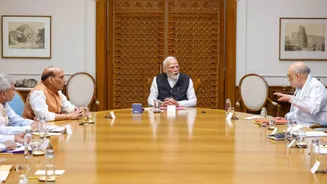







Prime Minister Narendra Modi on Thursday discussed with a group of senior ministers the prevailing global security situation and how to maintain supply
chain uninterrupted despite conflicts in different zones, including the Strait of Hormuz, the Black Sea, the Red Sea, and the Gulf of Aden. The extended Cabinet Committee on Security (CCS) meeting, chaired by the prime minister, was attended by permanent members - Defence Minister Rajnath Singh, Home Minister Amit Shah, External Affairs Minister S Jaishankar, Finance Minister Nirmala Sitharaman, and special invitees - Chemicals and Fertilisers Minister JP Nadda, Commerce Minister Piyush Goyal, Shipping Minister Sarbananda Sonowal and Petroleum Minister Hardeep Puri, official sources said. It is understood that a comprehensive discussion was held regarding ongoing global conflicts, their security implications, and the resulting disruptions to India's imports and supply chains - most of which transit through these conflict zones.
PM Modi Calls For Safety of Indian Nationals
The safety of Indian citizens in conflict zones and the protection of seafarers were also reviewed in detail during the two-hour-long meeting at the Parliament House complex, according to sources.
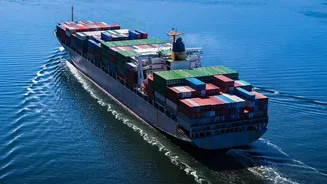
The ministers gave presentations on their respective ministries and steps taken by them to ensure uninterrupted import of all goods, including petroleum, natural gas and fertilisers, they said.
Global political situation is believed to have been discussed at the meeting, which was called in short notice, the sources said.
The prime minister is learnt to have given certain directions to the ministers to ensure the safety of Indians, India's economic interests and find ways to the supply chain hinderance.
India's Energy Import From West Asia Takes A Hit Due To Iran War
Before the US-Israel's war with Iran, India's 40 per cent energy import came through the Strait of Hormuz. With the conflict not ending permanently, India's energy import from West Asia was badly hit.
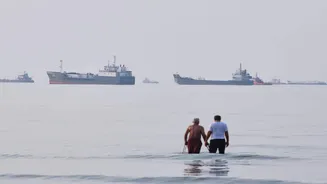
The energy import through the Strait of Hormuz continues to be minimum due to the intermittent attacks on the oil and cargo ships.
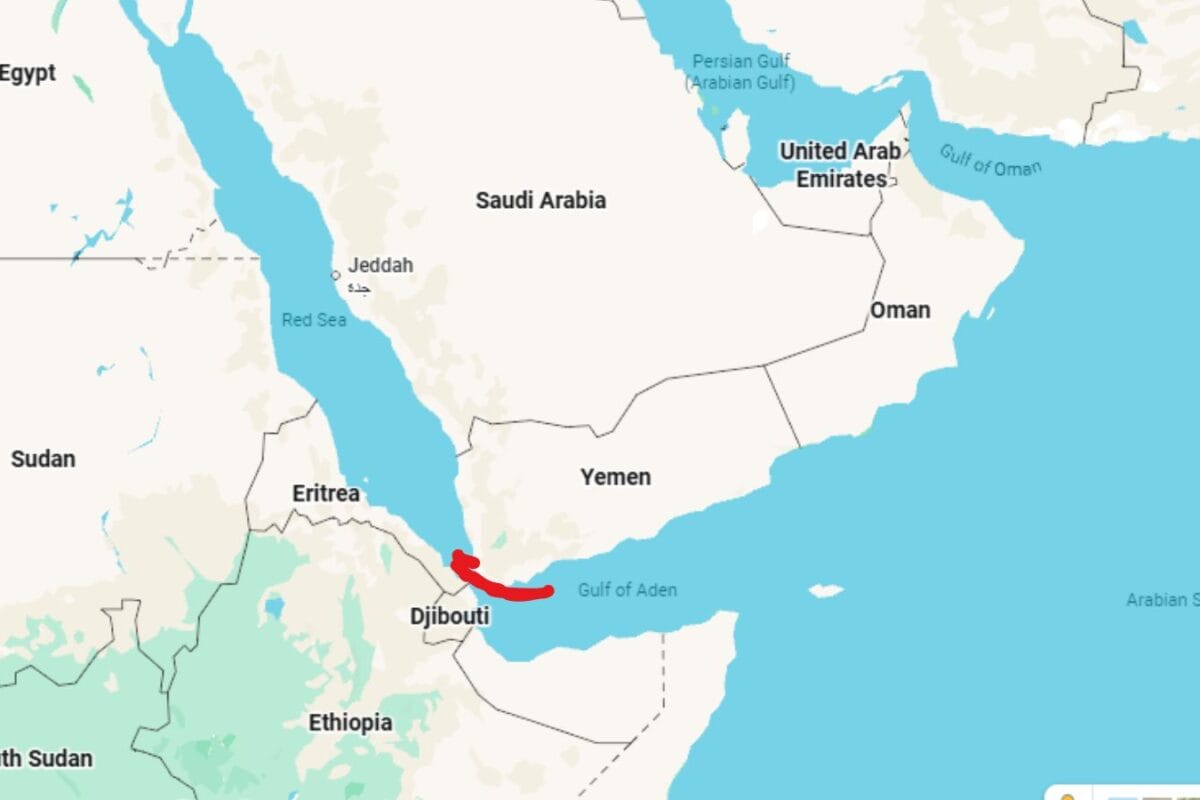
Last week, the Yemen-based Houthi militia announced that it will target Saudi Arabian tankers attempting to cross the Bab al-Mandab. The group also targeted a few ships following the announcement.
The Bab al-Mandab connects the Red Sea to the Gulf of Aden and the Arabian Sea and a critical chokepoint for global trade, and energy supplies -- similar to the Strait of Hormuz.
According to the data available, the impact is already visible as ships crossings through the Bab al-Mandab decreased to an average 31 per day over the past three days in comparison to 43 per day in the first half of July.
Besides, Russian oil import through the Black Sea is also under pressure as Russia-Ukraine war intensified. There have been several attacks on ships passing through the Black Sea in last few days.
India depends on imports to meet its over 88 per cent energy requirements. India also imports a large amount of fertilisers from various sources. Besides about one crore Indians live and work in West Asia.