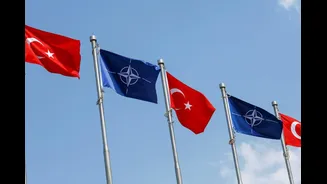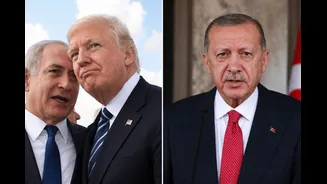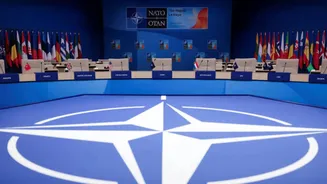









NATO leaders are gathering in Ankara for the 2026 NATO Summit, hosted by Türkiye at the Beştepe Presidential Compound. The meeting marks the alliance's
first summit in Turkey in more than two decades and comes at a pivotal moment as members debate defense spending, continued support for Ukraine, and the future of transatlantic security. All 32 NATO member states are expected to be represented at the head-of-state or head-of-government level, with no major absences among alliance members. Leaders Attending: All 32 NATO Members United States — President Donald Trump Canada — Prime Minister Mark Carney United Kingdom — Prime Minister Keir Starmer France — President Emmanuel Macron Germany — Chancellor Friedrich Merz Italy — Prime Minister Giorgia Meloni Netherlands — Prime Minister Dick Schoof Spain — Prime Minister Pedro Sánchez Poland — Prime Minister Donald Tusk Türkiye — President Recep Tayyip Erdoğan (Host) The remaining NATO members—Albania, Belgium, Bulgaria, Croatia, Czech Republic, Denmark, Estonia, Finland, Greece, Hungary, Iceland, Latvia, Lithuania, Luxembourg, Montenegro, North Macedonia, Norway, Portugal, Romania, Slovakia, Slovenia, and Sweden—are also expected to be represented by their respective heads of state or government. NATO Leadership NATO Secretary General Mark Rutte will chair the summit and oversee discussions among alliance leaders. Partner Nations and Special Guests Several key partner countries and international organizations are also taking part in the summit. Ukraine will be represented by President Volodymyr Zelenskyy, who is expected to participate in summit sessions and hold bilateral meetings with allied leaders. South Korea will send President Lee Jae-myung. The European Union will be represented by European Council President António Costa and European Commission President Ursula von der Leyen. Foreign ministers from Bahrain, Kuwait, Qatar, and the United Arab Emirates are also expected to attend, while Australia, Japan, New Zealand, and South Korea will participate through senior defense officials and other high-level representatives. Who Is Not Attending? There are no significant absences among NATO's 32 member states. Several global leaders are not attending because their countries are not NATO members or invited participants. These include:
- Russia — President Vladimir Putin
- China — President Xi Jinping
- India — Prime Minister Narendra Modi
- Israel — Prime Minister Benjamin Netanyahu
- Argentina — President Javier Milei
Some partner countries may send ministers instead of heads of government for specific sessions, which is standard diplomatic practice.
Key Issues on the Agenda
Leaders are expected to focus on several major issues, including:
- Increasing NATO defense spending targets and burden sharing.
- Continued military and financial support for Ukraine.
- Countering Russian military aggression and hybrid threats.
- Security challenges in the Middle East.
- Expanding NATO's defense industrial capacity.
- Cybersecurity, artificial intelligence, and emerging technologies.
- Strengthening cooperation with Indo-Pacific and Gulf partners.
The summit is expected to produce new commitments on defense investment, military readiness, and alliance cooperation. President Donald Trump's participation, along with his anticipated bilateral meetings with President Recep Tayyip Erdoğan and President Volodymyr Zelenskyy, is likely to be closely watched for indications about the future direction of U.S. engagement with NATO and European security.