





What is the story about?
CAPE CANAVERAL, Fla. (AP) — NASA's upcoming Artemis II mission marks humanity's first return to the moon in over 50 years, igniting comparisons with the historic
Apollo program. This mission will feature a diverse crew, including a woman and a person of color, reflecting societal changes since the Apollo era. The Artemis II astronauts are set to launch in early April, embarking on a lunar flyby.
Historical Context of Lunar Missions
The Apollo program achieved remarkable success, landing astronauts on the moon just eight years after the first American was sent to space. Apollo 11's Neil Armstrong and Buzz Aldrin famously walked on the lunar surface in 1969, fulfilling President John F. Kennedy's ambitious goal.Artemis, however, has faced a slower development pace, partly due to shifting priorities between lunar and Martian exploration. NASA's Space Launch System (SLS) has only completed a single uncrewed test flight since its inception, highlighting the challenges of modern space exploration.
NASA Administrator Jared Isaacman has implemented a revamped Artemis program, introducing an intermediate mission before the planned Artemis IV moon landing in 2028. The upcoming Artemis III will focus on Earth-based operations, akin to Apollo 9's mission in 1969.
Current Geopolitical Landscape
During the Apollo era, the Soviet Union was the primary competitor in space exploration, facing setbacks with their moon missions. Today, China's advancements pose a new challenge, as they aim to land astronauts on the moon's south pole by 2030.NASA is targeting the same region, where potential ice deposits could be crucial for future lunar habitation. Isaacman has expressed a commitment to outpace China in this new space race.
Technical Specifications of the Rockets
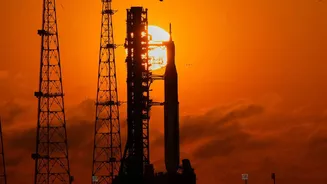
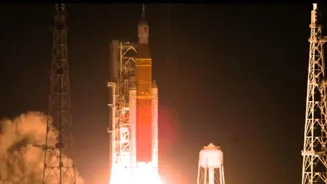
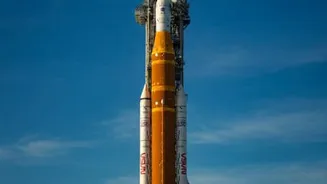
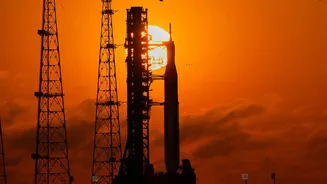
Apollo's Saturn V rocket stood at 363 feet, featuring five engines for liftoff. In contrast, the Artemis SLS is slightly shorter at 322 feet but boasts greater thrust with four main engines and two boosters.All Saturn V launches occurred from Kennedy Space Center’s Launch Complex 39-A, while Artemis missions will utilize pad 39-B. The SLS has encountered multiple technical issues, including hydrogen fuel leaks, delaying its debut and subsequent Artemis II launch, now slated for April.
Despite these setbacks, the Artemis program has made history by appointing a woman, Charlie Blackwell-Thompson, as the launch director, a significant step forward for gender representation in NASA leadership.
Mission Objectives and Preparations
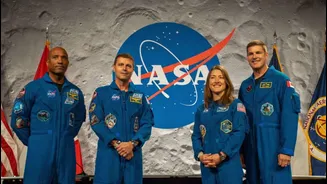
Apollo 8 remains a notable mission, as it was the first crewed flight to orbit the moon. In contrast, Artemis II will not attempt lunar orbit due to safety concerns, focusing instead on testing the Orion capsule's life-support systems.Artemis II pilot Victor Glover emphasized the mission's potential to inspire hope amid current global challenges, reflecting the spirit of exploration that characterized Apollo missions.
Mission Execution and Challenges
The Artemis II mission will include a day of orbiting Earth before heading to the moon, utilizing a free-return trajectory that minimizes fuel use. This trajectory mirrors the approach taken by Apollo 13, which successfully returned its crew despite a failed moon landing.Similar to Apollo missions, the Artemis astronauts will land in the Pacific Ocean post-mission, continuing the legacy of human space exploration.
Space Suit Innovations
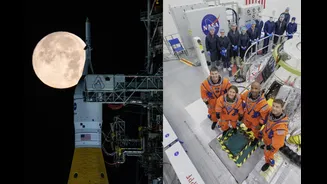
While Apollo astronauts wore bulky, white suits for both launch and moonwalks, Artemis astronauts will utilize specialized suits designed for various phases of the mission. The Orion capsule can accommodate four astronauts and their suits, enhancing safety and comfort during the flight.Commander Reid Wiseman and his crew will don custom-fitted orange suits for launch and reentry, capable of sustaining them for up to six days in emergencies, a significant improvement over previous designs.
Long-Term Vision for Lunar Exploration
The Apollo missions were driven by the desire to outpace the Soviet Union, resulting in six successful lunar landings from 1969 to 1972. In contrast, the Artemis program envisions extended stays on the moon, with astronauts potentially spending nearly a week on the lunar surface.Future missions will involve transferring from the Orion capsule to lunar landers developed by SpaceX or Blue Origin, emphasizing collaborative efforts in space exploration.
NASA's ambitions extend beyond the moon, with plans for sustained lunar habitation and eventual missions to Mars. Administrator Isaacman recently revealed a blueprint for a lunar base, illustrating NASA's commitment to long-term space exploration initiatives.