






New Delhi: Construction activities in Delhi will be completely banned from December 10 to January 20 as part of the government’s measures to curb air pollution
during the winter season, Chief Minister Rekha Gupta said on Friday. In a post on X, Gupta urged citizens to report violations and said construction sites measuring more than 500 square metres would be monitored through the Delhi government’s Dust Portal and AI-enabled cameras. “Construction will be completely banned from 10 December to 20 January. If you spot any violation, inform MCD, your MLA, or me directly,” Gupta said. The chief minister said construction work had continued at some sites during the previous winter despite the implementation of the Graded Response Action Plan (GRAP), with some projects allegedly being carried out behind covers to avoid detection.
“Last time, even under GRAP, some construction continued behind covers,” she said.
Gupta said the government would use real-time monitoring through the Dust Portal and AI-enabled cameras this year. Alerts generated by the system will be sent to the government’s Control and Command Centre, following which notices, warnings and fines will be issued to violators.
AI Cameras to Track Violations
The Delhi government launched the AI-powered Dust Portal 2.0 in July to strengthen monitoring of construction and demolition sites and improve enforcement of dust pollution control measures.
The portal, developed by the Delhi Pollution Control Committee, integrates GIS mapping, live 360-degree PTZ cameras, PM10 and PM2.5 sensors and AI-based analytics to monitor compliance at construction sites measuring 500 square metres or more.
The system generates yellow, orange and red alerts based on pollution levels and allows authorities to issue compliance certificates and enforcement notices digitally when violations are detected.
The upgraded portal also provides dashboards for district-wise monitoring, pollution trends and hotspot analysis. Officials and project proponents can remotely monitor construction sites through live camera feeds, sensor data and AI-generated analysis.
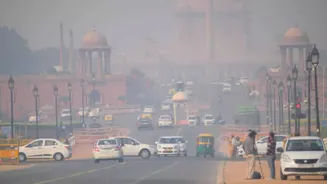
The move comes ahead of the winter months, when Delhi-NCR typically experiences a sharp deterioration in air quality due to weather conditions, emissions and other pollution sources.