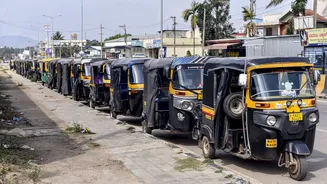







Bengaluru LPG Relief: Factories and business outlets in Bengaluru received significant relief on Wednesday, April 8, after the Union Government announced
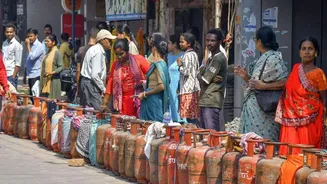
it would restore up to 70% of their LPG requirements. The move comes in the wake of a severe commercial gas crunch that forced a number of restaurants and eateries in the city to temporarily shut down. The crisis deepened after the Centre prioritised domestic household supply over commercial and industrial users, leaving businesses across the hospitality and manufacturing sectors struggling to stay operational. The Union Ministry of Petroleum and Natural Gas has announced two significant measures this week aimed at improving LPG access - one for industrial units across the country and another for migrant labourers who struggle to obtain cooking gas. Industries to Receive 70% of LPG Requirements The ministry announced on Wednesday that industrial units will now receive up to 70% of their LPG requirements, a move designed to ease fuel supply pressures and keep production running smoothly. Also Read: Bengaluru BTech Student Dies; Father Challenges College's Version of Events The directive covers a wide range of sectors including pharmaceuticals, food processing, polymers, agriculture, packaging, paint, steel, metals, ceramics, glass, foundries, forging, uranium, heavy water, seeds, aerosol manufacturing, and more. According to the ministry's circular, industrial units may now obtain up to 70% of their pre-March 2026 bulk non-domestic LPG consumption levels, subject to an overall sectoral cap of 0.2 TMT per day. The ministry has also stated that it will give priority to units that use LPG for specialised purposes where natural gas cannot serve as a substitute. Supply of 5kg Cylinders Doubled for Migrant Workers On Monday, the ministry announced a separate but equally important measure - doubling the supply of 5kg LPG cylinders to ensure that migrant labourers across the country have reliable access to cooking gas. Also Read: Bengaluru Man Beaten Until Bedridden for Salary; Gets Paid Hours Later These smaller cylinders fall under the Free Trade LPG (FTL) category and are available for purchase at LPG distribution agencies, select petrol pumps, and retail outlets. A customer simply needs to produce any government-issued identity card to buy one. An Indane FTL cylinder costs Rs 1,505, with each subsequent refill priced at Rs 630. HP FTL cylinders are priced at Rs 1,519, with refills available at Rs 631. Awareness Remains a Challenge Despite the initiative, awareness among migrant workers remains a significant hurdle. LG Kumar, Secretary of the Karnataka circle of the All India LPG Distributors Federation, pointed out that FTL cylinders were available previously but were never widely publicised. Many migrant workers simply did not know they could buy one. Kumar also noted that many workers hesitated to seek a regular LPG connection because it requires an Aadhaar card and other documents that they may not possess. Making FTL cylinders more widely known, he added, also helps tackle the problem of illegal refills, which unscrupulous sellers often sell at inflated prices. Each distributor is currently receiving around 50 FTL cylinders per day from companies. "Most migrant workers are unaware of FTLs. Our delivery personnel are spreading awareness at railway stations, bus stands, labourers' settlements, and other areas," Kumar said. Distributors Seek Clearer Guidelines However, not everything is running smoothly on the ground. During a video conference held on Wednesday between Deputy General Managers of oil companies and ministry secretaries, officials instructed distributors to issue cylinders to any customer who produces a valid government identity card. This has left distributors in a difficult position. They are uncertain how they can verify whether a customer is genuinely a migrant worker or truly in need of the cylinder. Distributors say they are still waiting for clear guidelines on preventing misuse and ensuring that the smaller cylinders do not end up being bought indiscriminately by those who do not need them. The measures signal a clear intent by the government to address LPG access at both ends of the spectrum - keeping industry running and ensuring that the country's most vulnerable workers can cook a meal without difficulty. However, effective implementation will depend heavily on clearer communication, stronger awareness drives, and practical safeguards against misuse.