



Iran has built a vast network of more than 5,000 secret military-linked agencies to procure weapons components, explosives and heavy-duty vehicles from
overseas, allowing Tehran to replenish its military supplies despite decades of Western sanctions and a US naval blockade, a Reuters investigation has found. The investigation, conducted in collaboration with Israeli-American risk consultancy 240 Analytics, identified a procurement network operating under names beginning with MOD, an abbreviation for Iran's Ministry of Defence. The agencies allegedly form a parallel financial and trade system connected to the country's military establishment, the Islamic Revolutionary Guard Corps (IRGC) and powerful state-linked conglomerates. According to Reuters, the network helped Iran import at least $2 billion in military hardware since January 2025. One agency, identified as MOD 346428, alone imported approximately $2.3 billion worth of military hardware between January 2025 and June 2026, according to import records reviewed by the investigation. The findings offer an insight into how Iran has continued replenishing its missile and drone programmes even as the United States and Israel have targeted its military infrastructure during the ongoing war.
How Iran's secret procurement network operates
The numbered agencies reportedly share the same Tehran address as Iran's Ministry of Defence and Armed Forces Logistics (MODAFL). Their official incorporation dates are listed as February 11, 1979, the day Ayatollah Ruhollah Khomeini came to power following the overthrow of Iran's monarchy.
However, corporate and financial records reviewed by Reuters indicate that most were actually established in 2013, when Iran was facing mounting sanctions and severe economic pressure. The agencies allegedly operate through a network of foreign intermediaries and shell companies, referred to as trustees, which procure goods on behalf of Iran's military. The system also draws on revenue from illicit oil sales, allowing Tehran to finance purchases without relying on conventional international banking channels.
In 97 per cent of the shipments reviewed by Reuters, transactions were settled without a currency transfer. Instead, intermediaries based overseas reportedly used money held in foreign bank accounts to purchase and ship the goods to Iran.
Miad Maleki, a former senior US Treasury Department official who helped design Washington's sanctions programme against Iran, described the network as the regime's military lifeline.
"What you have here is the regime's military lifeline during this conflict and for many years before," Maleki told Reuters, calling it the complete ecosystem of Iran's military trade business.
Chinese, Russian and European supplies
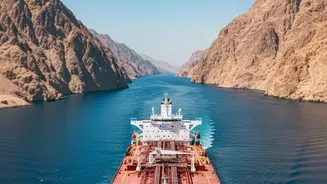
The investigation found that military-linked agencies continued importing materials through multiple routes, including cargo ships across the Caspian Sea from Russia, trucks from Central Asia and freight aircraft from China.
Among the materials identified were rocket fuel ingredients, explosives, detonators, aircraft engine components and high-strength metals that can be used in missile manufacturing.
During the first six months of 2026, deliveries reportedly included $1.9 million worth of detonators, tonnes of explosives, aircraft engine parts and rocket fuel ingredients. Experts who reviewed the findings said many of these materials could be used in Iran's ballistic missile and drone programmes, including the Shahed series.
One shipment arriving at Iran's Bandar Abbas port on February 9, 2026, contained 93 tonnes of unwrought Chinese titanium, a material that can be used in missile airframes and rocket motor casings.
The investigation also identified imports originating in Germany and other European Union countries, including trucks, aircraft engine components and electronics. More than $34 million worth of Iveco trucks were listed in the import records under MOD 346428.
The findings also point to continued procurement from Russia. A shipment in June 2026 contained $1.9 million worth of Russian detonators, part of five similar shipments that delivered a combined $7.6 million worth of the components since the beginning of 2025.
China's Foreign Ministry said it was "unaware of the situation" described in the investigation and rejected attempts to link Beijing to regional hostilities. Russia's Defence Ministry did not respond to Reuters' requests for comment.
Military trucks converted into mobile launch platforms
Beyond missile components and explosives, the procurement network has reportedly helped Iran acquire thousands of heavy-duty vehicles that can be modified for military use.
MOD 346428 imported hundreds of Iveco trucks and thousands of Toyota Hilux and Land Cruiser vehicles. Iran's military has regularly displayed such vehicles during military parades and on state television. The trucks are particularly significant because heavy-duty vehicles can be adapted to transport military equipment or serve as concealed mobile launch platforms for missiles and drones.
Reuters traced some imported Iveco vehicles to a customs yard outside Tehran using satellite imagery, social media footage and vehicle identification numbers. The investigation also identified a 2022 transaction involving six Iveco Eurocargo trucks purchased by an Iranian car dealer in Italy, routed through a Dubai-based company and ultimately delivered to Sahara Thunder, an Iranian entity involved in drone manufacturing and supply.
Sahara Thunder was sanctioned by the United States in 2024 over its alleged role in supplying drones to Russia for use in the war against Ukraine.
Iveco said it had no control over products transferred by third parties with which it had no direct contractual relationship. The company added that it had no record of the 2022 sale and said most of the trucks identified by Reuters had been destined for Central Asia.
Toyota, meanwhile, said it did not conduct business in Iran and had no knowledge of the purchases identified in the investigation.
The investigation found that despite years of sanctions and sustained military pressure, Iran's procurement system has continued to source critical materials through a complex network of intermediaries, foreign suppliers and financial channels. The findings underline the difficulty of disrupting Tehran's military supply chains even as its missile and drone infrastructure remains a central target of the ongoing war.