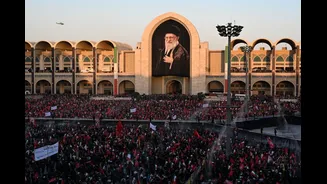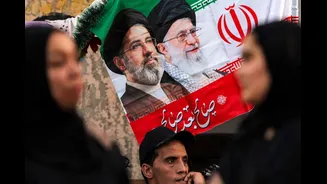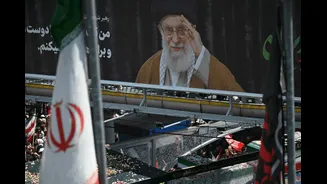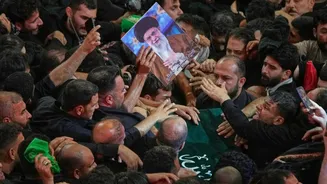









Hundreds of thousands of mourners attended the funeral procession of Ayatollah Ali Khamenei, the Supreme Leader of Iran. He was killed in the U.S.-Israel
war withIran. Several delegates from India travelled to Iran to attend his funeral. Amidst all this, a group of 100 mourners from Karnataka's Alipura village in Chikkaballapur district joined the funeral procession in Tehran, the capital of Iran. There is a historical connection between Khamenei and this village, which is also known as the "Gems Village of South India". Khamenei visited the village in 1981, a couple of decades ago. He had been invited by the late Prime Minister Indira Gandhi, and it was during this visit that he travelled to Alipura. The occasion became a historic moment for the residents. In his honour, the village's main road was named Imam Khomeini Road, and Alipura is also often referred to as Mini Iran. The village is predominantly inhabited by Shia Muslims, while Hindus and Christians form a minority. It is also known for its religious and cultural ties with Iran, making it a common destination for theological and medical studies. For decades, students from this village in Karnataka have travelled to Iranian cities such as Qom and Mashhad to pursue religious education. Many also visit Iran for pilgrimage. It shows the deep ties that the country's Shia Muslims have with Iran. These exchanges have strengthened cultural and religious links between the two regions. Residents of Alipura have often described Iran as a spiritual centre, and many families continue to maintain close connections through educational, religious and community networks that have existed for generations. Read More:Jordan Bardella: The Gen Z-Friendly Face of France’s Far-Right Politics According to reports, Khamenei also inaugurated the Imam Khomeini Medical Trust (IKMT). The Alipur Info website states: "The hospital was established under the guidance of Sigathul Islam Maulana Syed Abbas Hussain Baqri Saheb Qibla and with the support of Rahbar-e-Muazzam Ayatollah Syed Ali Khamenei, who visited Alipur in 1980 and envisioned the establishment of a hospital in the area." The hospital opened in 1991. When the reports of his death first emerged, the villagers had announced a three day mourning period. All celebrations in the village were put on hold, and a special prayer was also organised in the mosque for him. According to PTI, "The mourners wore black dresses, held black flags and took out a march condemning the killing of Khamenei, who was reportedly killed in the shelling."
Iran's Kintoor Connection
Lucknow, the capital of Uttar Pradesh, is home to one of the largest Shia communities in India. The connection between the Ayatollahs and India goes back to Kintoor, a village near Lucknow. It is the ancestral home of Ruhollah Khomeini, the Imam and former revolutionary leader of Iran. Khomeini's paternal grandfather, Syed Ahmad Musavi Hindi, was born in this village. He travelled on a pilgrimage to Najf (modern day Iraq) in his twenties and eventually settled in Khomein, in Iran's Markazi province, in 1834.Khamenei was a student of Khomeini and served as his trusted confidant during the 1979 Iranian Revolution before ultimately succeeding him as the second Supreme Leader of Iran in 1989.