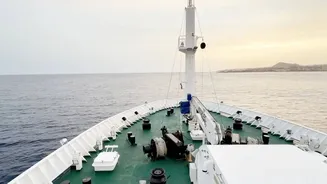









What is the story about?
Recent outbreaks of hantavirus and norovirus on cruise ships have raised health concerns, but industry experts assert that the demand for cruise vacations
remains strong. Many anticipate a record number of cruise travelers globally this year, despite recent incidents involving fatalities and illness on board. The Cruise Lines International Association forecasts that 38.3 million people will embark on ocean-going cruises in 2023, marking a 4% increase from last year's record of 37.2 million passengers. Industry representatives emphasize that these health incidents are unlikely to deter travelers.
Industry Response to Health Outbreaks
Rob Kwortnik, an associate professor at Cornell University, notes that cruise consumers appear unaffected by negative media coverage. He commented, “The cruise consumer seems to be somewhat Teflon when it comes to stories like this.” Despite three deaths linked to the MV Hondius due to hantavirus and a recent norovirus outbreak on another ship, the overall outlook remains positive.Current Booking Trends
While industry sales figures are confidential, the Cruise Lines International Association has refrained from commenting on the potential impacts of the recent outbreaks. Major cruise lines, including Royal Caribbean and Carnival, have not disclosed customer demand specifics. However, Oceanwide Expeditions, the operator of the MV Hondius, confirmed no operational changes, with a cruise scheduled to depart from Keflavik, Iceland, on May 29.Cruisegoers Remain Unfazed
Experienced cruisers express confidence in their travel plans despite health concerns. Jenni Fielding, a cruise blogger, stated, “I have eight cruises booked, and I’ll absolutely be booking another.” She emphasized that cruising is comparable in safety to other vacation types, provided travelers adhere to health guidelines.Scott Eddy, a hospitality influencer currently on a cruise, reported that fellow passengers have not mentioned the hantavirus outbreak, indicating a general sense of normalcy among travelers.
Market Demand and Future Outlook
According to CruiseCompete.com, bookings for cabins increased by 31.7% in early May compared to the same period last year. CEO Bob Levinstein remarked, “I can categorically say that we have not seen any drop in demand.” He noted that norovirus is often associated with cruise travel due to CDC reporting requirements, which may skew public perception.Kwortnik pointed out that news cycles rarely affect passengers' decisions since cruises are typically booked six months to a year in advance. He stated, “People who are booking cruises tomorrow are thinking about the holidays.”
Long-Term Implications for the Industry
Viking, a Switzerland-based cruise line, reported a brief dip in demand for river cruises earlier this year, which quickly rebounded. The company announced that 92% of its 2026 cruises and 38% of its 2027 cruises have already been booked.Andrew Coggins, a cruise industry analyst, mentioned that while some travelers may feel anxious about recent health news, they are unlikely to cancel bookings. “If there’s any impact on demand, it would be in the long term,” he said, noting that many bookings are non-refundable.
Cruising's Broad Appeal
Coggins highlighted that the current situation may evoke memories of the Diamond Princess, which was quarantined in early 2020 due to a coronavirus outbreak. However, he noted that demand for cruises has significantly rebounded since the pandemic's peak.Despite a decrease in cruise passengers from China and Japan, demand from other regions is surging. Coggins stated, “There are new ships on order out to 2037. The cruise lines are bullish. They see demand growing.”
Cruising Value Proposition
The cruise industry appeals to a diverse demographic, with a recent Bank of America survey revealing that Generation Z and millennials are particularly inclined to cruise. The survey also indicated that lower-income households are spending more on cruises while reducing expenses on other travel components.Kwortnik noted that cruising offers exceptional value compared to traditional vacations, stating, “On average, it costs more just to stay at a hotel in Miami than it does to sail on a cruise out of Miami.”