








What is the story about?
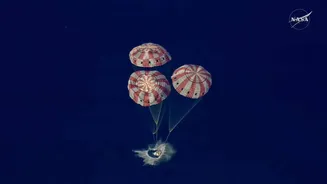
HOUSTON (AP) — Artemis II concluded humanity's first lunar voyage in over 50 years with a Pacific splashdown on Friday, setting multiple records during
its journey near the moon. This dramatic finale not only showcased previously unseen areas of the lunar far side but also offered stunning views of a total solar eclipse and a celestial alignment featuring Earth against the backdrop of space.
Successful Splashdown
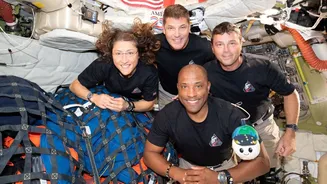
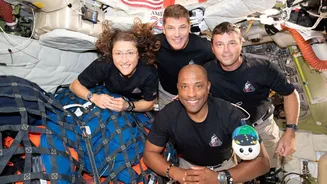
With their mission complete, the four astronauts have paved the way for a future moon landing by another crew within two years, and the establishment of a lunar base within the decade.The astronauts — commander Reid Wiseman, pilot Victor Glover, Christina Koch, and Canada’s Jeremy Hansen — emerged from their capsule, greeted by sunlight off the San Diego coast.
In a scene reminiscent of the Apollo moon landings, military helicopters retrieved the astronauts from an inflatable raft attached to their capsule, transporting them to the Navy's recovery ship, the USS John P. Murtha.
Celebration at Mission Control
NASA Administrator Jared Isaacman expressed pride in the crew's accomplishments, stating, “These were the ambassadors from humanity to the stars that we sent out there right now, and I can’t imagine a better crew.”Celebrations erupted in Mission Control as personnel cheered, with Lori Glaze proclaiming at a news conference, “We did it. Welcome to our moonshot.”
Record-Breaking Journey
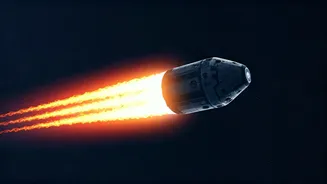
The Orion capsule, named Integrity, completed its descent on autopilot, hitting the atmosphere at Mach 33, a speed reminiscent of the Apollo era.As the capsule entered a planned communication blackout, tension rose in Mission Control, with observers focused on the heat shield designed to withstand extreme temperatures during reentry.
Families of the astronauts watched the events unfold nearly 2,000 miles away, celebrating as the capsule emerged from its blackout and splashed down successfully.
Historic Milestones
Artemis II reached a maximum distance of 252,756 miles (406,771 kilometers) from Earth, breaking Apollo 13's previous record. The astronauts also made an emotional request to name craters after their moonship and Wiseman's late wife, Carroll.During the mission, they captured images of the moon's far side and experienced a total solar eclipse, which Glover described as an awe-inspiring moment.
The crew's visuals included a breathtaking depiction of Earth setting behind the moon, reminiscent of Apollo 8's iconic Earthrise photograph.
Future Missions and Challenges
Despite the mission's scientific achievements, the nearly 10-day flight faced technical difficulties, including valve issues in the capsule's drinking water and propellant systems, as well as a malfunctioning toilet.Military aircraft photographed the heat shield during reentry, and divers examined it upon splashdown, with more thorough evaluations planned.
Koch emphasized the importance of overcoming challenges, stating, “We can’t explore deeper unless we are doing a few things that are inconvenient.”
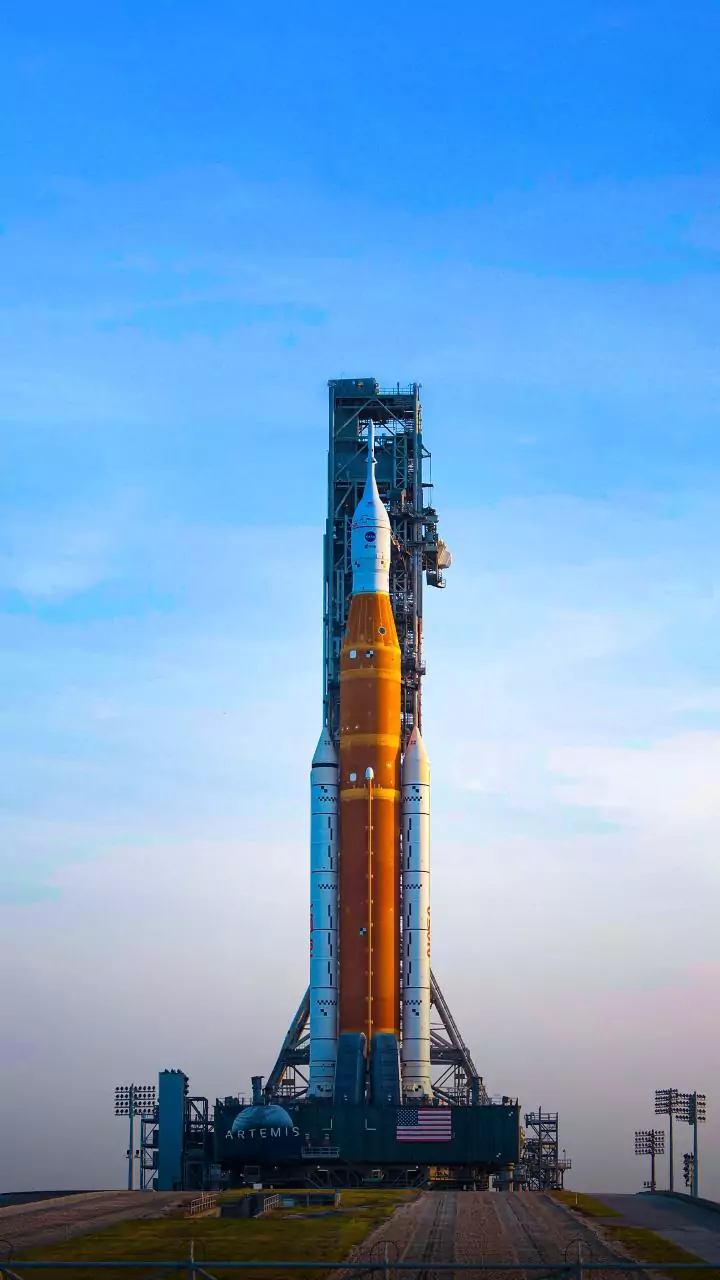
Looking ahead, Artemis III will focus on docking practice with lunar landers, while Artemis IV aims to land a crew near the moon's south pole by 2028.
Wiseman noted the astronauts' commitment to future crews, hoping their journey would inspire global appreciation for Earth, saying, “We should all cherish what we have been gifted.”