







What is the story about?
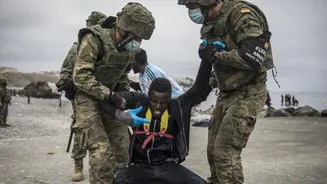
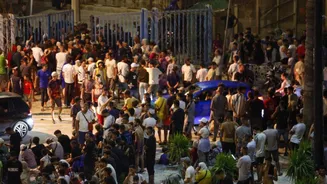
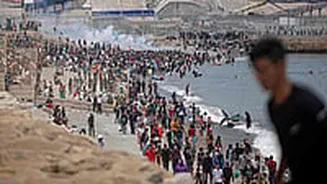
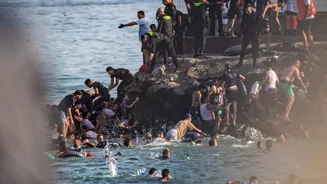
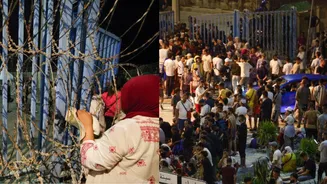
Spain's North African enclave of Ceuta has witnessed one of the largest migrant surges in recent years, with nearly 49,000 people crossing from Morocco
in just 24 hours. The extraordinary influx overwhelmed border authorities, prompted the deployment of Spanish troops and reignited a political battle over migration. But officials and legal experts say the sudden rush was not random. Instead, it was driven by a recent Spanish Supreme Court ruling that created a critical distinction between migrants entering by land and those arriving by sea, a legal gap that smugglers rapidly exploited.
What did the Supreme Court rule?
In its April 8, 2026 judgment, Spain's Supreme Court upheld the practice of "hot returns" for migrants who cross Ceuta's land border by climbing or breaching its border fences.
However, the court ruled that the same immediate pushback mechanism does not apply to migrants who reach Spanish territory by sea. Since swimming around border barriers does not amount to breaching a physical fence, authorities must instead process each arrival individually under Spain's immigration and international protection laws.
Why did this trigger a surge?
According to officials, human trafficking networks quickly seized on the legal distinction.
Smugglers allegedly circulated messages on social media claiming that migrants who reached Ceuta by swimming would be protected from immediate deportation. Thousands then attempted the sea crossing, overwhelming Spain's border infrastructure and creating a legal bottleneck for authorities.
The result was an unprecedented influx that far exceeded Ceuta's capacity to receive, identify and process new arrivals.
Why can't Spain deport everyone immediately?
The court ruling requires Spanish authorities to individually identify and process every migrant arriving by sea before any deportation decision can be made.
The challenge has been compounded by the presence of around 7,000 minors, many of them believed to be unaccompanied. Under Spanish and international law, children are entitled to additional legal protections, making collective expulsions impossible and significantly slowing repatriation efforts.
Human toll and political fallout
The border rush has also turned deadly. Officials say at least 18 people died while attempting the dangerous journey across the water, highlighting the risks associated with the crossing.
The crisis has intensified political pressure on Prime Minister Pedro Sánchez's government. The Interior Ministry says it is coordinating with Moroccan authorities to speed up the return of migrants who entered illegally, while Sánchez travelled to Ceuta to oversee the government's response.
The government is also weighing additional border security measures, including the possible installation of physical barriers at sea. Under the Supreme Court's ruling, such structures could allow authorities to conduct immediate maritime pushbacks in the future.